

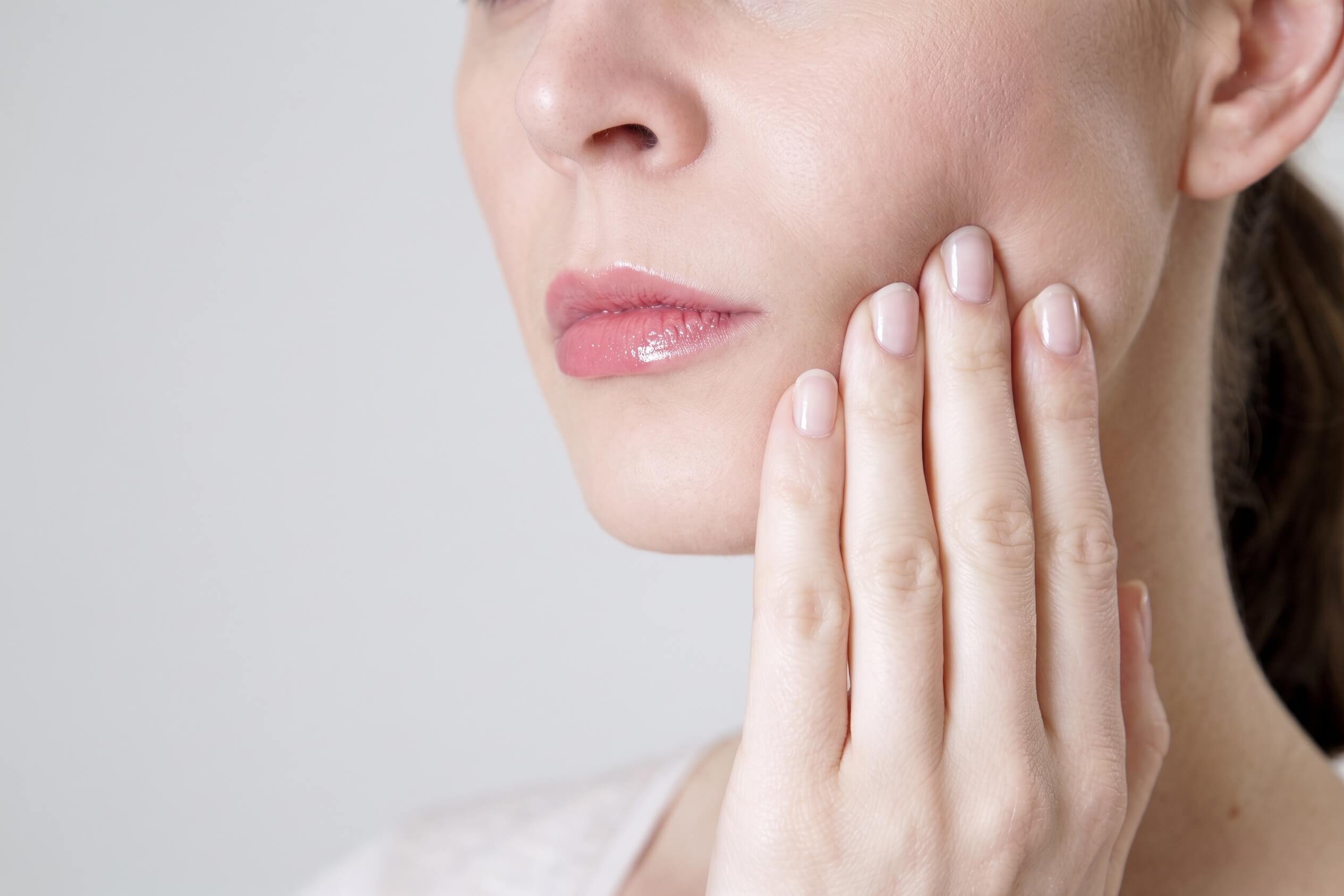

What Is Teeth Grinding?
Teeth grinding, known clinically as bruxism, is the involuntary clenching or grinding of the teeth. When it happens overnight, which is the most common pattern, it is called sleep bruxism. Because it happens unconsciously, most people discover it indirectly: a partner mentions the noise, a dentist points out worn enamel, or they start waking with a tight jaw and a headache.
It is not a minor habit. The masseter is one of the strongest muscles in the body for its size, and sustained overnight clenching applies far more force than normal chewing ever does. Over time that affects the teeth, the jaw joint and the shape of the lower face.

What Causes Teeth Grinding?
Teeth grinding can be caused by a variety of reasons, including stress, anxiety and sleep problems, and can become exacerbated through the consumption of alcohol, caffeine and recreational drugs, as well as prescription medication such as SSRIs (selective serotonin reuptake inhibitors).
Other contributing factors include:
- Bite problems or misaligned teeth
- Sleep disorders, including sleep apnoea
- Periods of high stress or disrupted sleep
- Some medications, particularly certain antidepressants
How to Tell If You Grind Your Teeth
Because grinding happens in your sleep, the signs are indirect. The more of these you recognise, the more likely it is:
- Waking with a tight or aching jaw, or with headaches at the temples
- Tooth sensitivity, worn enamel, chips or fractures
- A dentist raising grinding at a check-up
- Earache or facial pain with no obvious cause
- Disturbed sleep, for you or your partner
- A lower face that has gradually squared off
That last one surprises people. The masseter muscle, used in chewing, thickens when it is overexercised, and that can produce a wide or square-looking jaw without any change in weight.
How to Stop Grinding Your Teeth
Grinding is easy to live with for years without connecting the headaches, the worn teeth and the change in face shape to the same cause.
Book your consultation and our team will examine the muscle, review your symptoms and tell you whether treatment is likely to help in your case. You can also reach us on 0207 034 5999.
Teeth Grinding and TMJ
The masseter attaches close to the temporomandibular joint, the hinge connecting the jaw to the skull. When the muscle is chronically overworked, the load on that joint increases, and jaw soreness, tenderness, clicking and restricted movement often follow. This overlaps with temporomandibular joint disorder, and with the wider group of temporomandibular disorders affecting the joint and the muscles around it.
Reducing the force of clenching takes pressure off the surrounding structures, which is why patients treated for grinding frequently report that the jaw ache, earache and headaches ease as well.
An important distinction: this treatment addresses the muscle, not the joint itself and not the teeth. Anyone with significant joint pain, locking, restricted opening or tooth damage should also be assessed by a dentist, since the underlying cause may need managing separately.
What to Expect From Treatment
The appointment takes around 20 minutes. Injections are given into the masseter on each side using a fine needle. Some patients describe a slight stinging sensation, and numbing cream can be applied beforehand.
Downtime is minimal. Mild tenderness or redness at the injection sites is normal and settles within a day or two.
Results appear between 2 and 5 days after treatment, with the relief from clenching usually noticed first. Any change in the width of the jaw develops more gradually, over several weeks.
Aftercare is simple: stay upright for four hours, avoid strenuous exercise for 24 hours, and avoid massaging the treated area.
Who will perform treatment?
Treatment at our London clinic is delivered by our team of doctors and aesthetic nurses, all licensed, certified and experienced in treating the masseter.
Placement matters here. Injected too high or too far forward, toxin can affect neighbouring muscles and alter the smile, which is why this treatment should be carried out by practitioners who treat the masseter regularly.
Our practitioners take the time to understand each patient's symptoms and concerns, and build a treatment plan around them rather than applying a standard dose.

Book a Consultation at PHI Clinic
At home
- Mouth guard for teeth grinding. A mouthguard worn at night protects the teeth from grinding. It can also help you become more aware of the habit.
- Reduce stress. Stress is a common cause. Identifying the source and managing it through exercise, meditation or therapy often reduces the grinding.
- Avoid caffeine and alcohol. Both increase the likelihood of grinding, so limiting your intake can help.
- Relax your jaw muscles. Before bed, place a warm cloth on the cheek or do some gentle jaw stretches.
- Get enough sleep. A lack of restful sleep contributes to grinding.
In clinic
Where the grinding is persistent and the symptoms are affecting your sleep or your teeth, masseter Botox in London targets the muscle itself. Botulinum toxin injections reduce how forcefully the masseter muscles can contract, which lowers the intensity of involuntary clenching without affecting normal chewing.
Treatment takes around 20 minutes. Results are noticeable between 2 and 5 days after treatment, and the effect is temporary, lasting 3 to 4 months, so regular top-ups are needed to maintain it.
A mouthguard protects the teeth from the consequences of grinding. Treating the muscle reduces the grinding itself. For many patients the two work best together, with the dentist managing the teeth and the clinic managing the muscle.
Safe and effective treatment
Your safety is our utmost priority. When it comes to Botox injections for teeth grinding, we maintain the highest standards of patient care. Only our experienced and highly qualified doctors and nurses perform these treatments, ensuring you're in capable hands throughout your treatment journey.
Prioritising thoroughness, we begin with a comprehensive consultation for every patient considering Botox. We take the time to understand your unique needs and concerns, ensuring that your treatment plan is tailored to you.




Teeth Grinding Frequently Asked Questions
Teeth grinding can be caused by a number of factors, including stress and anxiety, sleep disorders, caffeine and alcohol consumption, bite problems and medication side effects.
It can be. Grinding causes dental problems such as tooth sensitivity, worn enamel and even fractures. It can also cause headaches, jaw pain and other discomfort.
There is no definitive cure, but it can be managed. Stress reduction, mouthguards, treatment of the masseter muscle and dental work all play a part, and the right combination depends on what is driving it.
Yes. A mouthguard provides a protective barrier between the teeth and prevents them grinding together. It protects the teeth rather than stopping the grinding itself, which is why it is often used alongside muscle treatment.
The injections involve a small amount of product placed into the jaw muscles. Most patients report only a slight stinging sensation, typically mild and short-lived, and numbing cream can be applied to minimise any discomfort.
The effect is temporary, lasting 3 to 4 months, so regular top-ups are needed to maintain it. Many patients find the intervals lengthen with repeat treatment.
No. Normal chewing continues. Some patients notice mild fatigue when eating something tough in the first couple of weeks as the muscle adjusts.
Reducing the force of clenching often eases the jaw pain, earache and headaches associated with an overworked masseter. It does not treat the joint itself, so persistent joint symptoms should also be assessed by a dentist or specialist.
Location
PHI Clinic
102 Harley Street,
London,
W1G 7JB,
United Kingdom
Tel: 02070345999
Opening Hours
Monday & Tuesday - 9:30am to 6:00pm
Wednesday & Thursday - 9:30am to 8:00pm
Friday - 9:30am to 5:00pm
Saturday - 11:30am to 12:30pm
Sunday - Closed
Opening times can change, if your appointment is outside of these times please contact the clinic for confirmation.