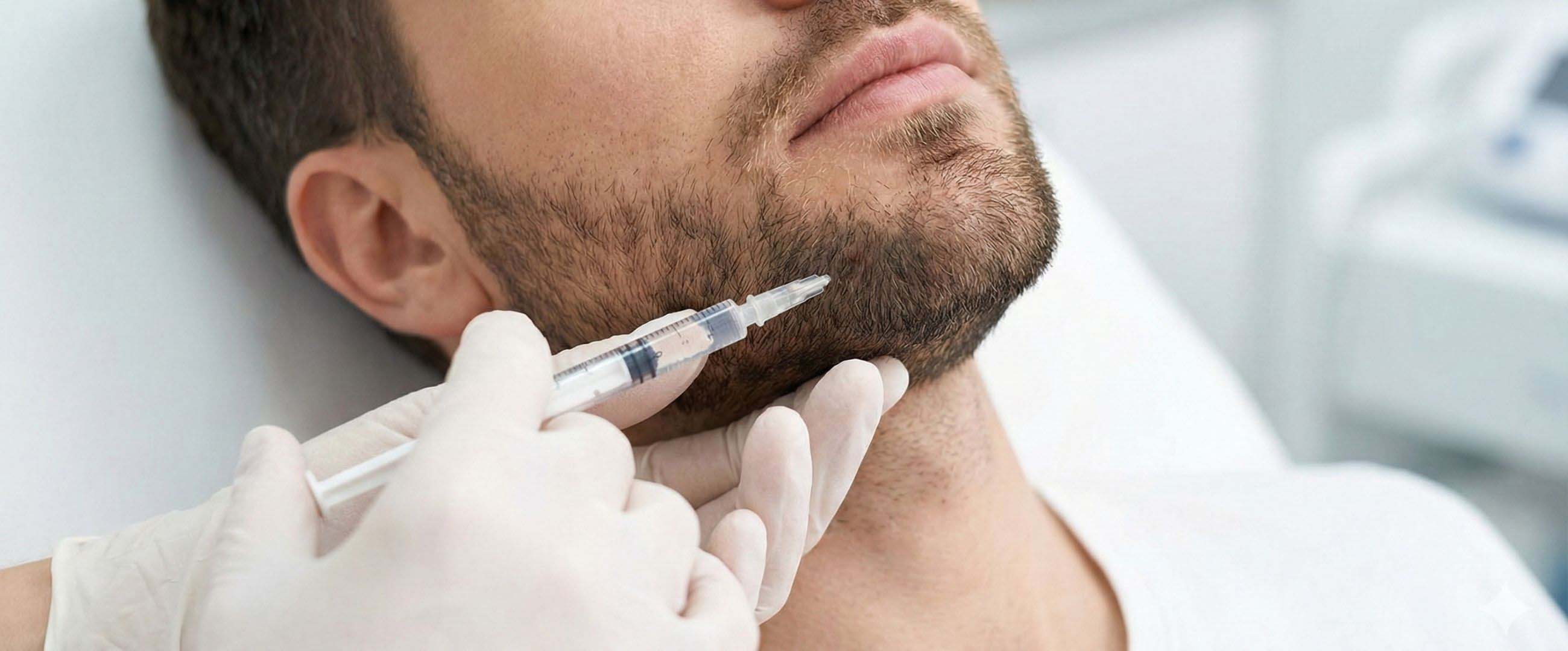
What Is Used in Chin Filler Treatments
Chin filler treatments typically use hyaluronic acid fillers, a category of injectable dermal fillers designed to integrate naturally with soft tissue. Hyaluronic acid is already present in the body and plays an important role in hydration and facial volume.
In medical aesthetics, hyaluronic acid dermal fillers are among the most widely used injectables because of their predictable behaviour, flexibility and safety profile. Like other face fillers, they integrate with the surrounding tissue rather than sitting on top of it. When used for chin enhancement, these chin dermal fillers provide structural support and lower-face definition without compromising facial movement or expression.
Because hyaluronic acid attracts water gradually, it allows controlled chin projection and facial proportion correction rather than abrupt or rigid change. From a safety perspective, this makes it particularly suitable for the chin treatment area, where balance, symmetry and facial movement are essential.
The Importance of Reversibility
One of the most important safety features of injectable fillers made from hyaluronic acid is reversibility. If required, the filler can be dissolved using a specific enzyme, allowing the practitioner to reduce or reverse the effect.
This reversibility provides reassurance for patients and medical professionals alike. It allows adjustments if results are not aligned with aesthetic goals, if facial proportions change over time, or if unexpected side effects occur.
Reversibility does not replace careful treatment planning, appropriate filler type selection or skilled injection techniques. However, it remains a critical component of patient safety when chin filler is used responsibly.
Why Practitioner Expertise Matters
The chin is a structural and functional area of the face. Safe chin enhancement relies on an in-depth understanding of bone position, soft tissue layers, facial volume distribution and how the chin supports the jawline and lower face.
An experienced medical professional or injector assesses chin projection, profile balancing, facial symmetry and overall facial aesthetics rather than treating the chin in isolation. Injecting without that assessment is where most problems begin, and it is what leads to imbalance, overfilling or unnatural contouring.
Safety is not only about avoiding complications. It is also about avoiding outcomes that feel disproportionate, restrict facial movement or undermine patient self-confidence. This is why chin fillers at our London clinic are delivered by GMC-registered doctors and NMC-registered nurse prescribers rather than by injectors who treat the chin occasionally.
London Medical Standards and Clinical Environment
In London, a cosmetic treatment such as chin filler is delivered within a regulated clinical environment. This includes appropriate training, professional governance, ongoing education and strict safety precautions.
A medical clinic setting supports comprehensive assessment, review of medical history, informed consent and ethical decision making. It also ensures that practitioners are equipped to manage swelling, bruising, downtime and recovery time appropriately, and to recognise when a treatment is not suitable.
Choosing a clinic that prioritises medical standards, facial balance and patient wellbeing is a fundamental part of treatment safety. It is the reason chin filler treatment in London at PHI Clinic begins with assessment rather than with product.
Chin Filler, Confidence and Responsible Decision Making
Safety in aesthetic medicine extends beyond the product and injection technique. It also involves understanding why a patient is seeking chin filler and whether the treatment aligns with their emotional wellbeing, facial identity and long-term goals.
This is particularly important for treatments that affect facial proportions, facial symmetry and overall appearance.
As Dr Tapan Patel, Founder of PHI Clinic, explains:
"Safety in aesthetic medicine is not only about technique and products, but also about understanding why a patient is seeking treatment and whether it is appropriate for them."
Responsible chin enhancement supports confidence without creating dependency or unnecessary intervention.
When Chin Filler May Not Be Appropriate
Safety also means recognising when not to treat. Certain anatomical features, unrealistic expectations, medical considerations or facial structures such as a significantly weak or recessed chin may require surgical chin augmentation, an alternative approach, or no treatment at all.
A thorough consultation allows the practitioner to evaluate suitability, discuss potential side effects, swelling, bruising and post-treatment care, and recommend alternatives where appropriate. In some cases, reassurance or observation is the safest option.
A Medical and Reassuring Approach to Chin Filler
At PHI Clinic, chin filler is approached as a medical treatment rather than a cosmetic shortcut. Each treatment approach is guided by anatomy, clinical judgement, facial balance and long-term outcomes rather than trends or filler volume.
Assessment focuses on chin projection, jawline augmentation where appropriate, facial proportions and individual suitability. The use of hyaluronic acid soft tissue fillers allows controlled, predictable results, with the reassurance of reversibility if needed.
Equally important is recognising when chin filler is not the right solution and when restraint, alternative cosmetic procedures or no treatment is the most responsible choice.
Chin Filler London Consultation
Understanding how and why chin filler can be performed safely helps patients make informed decisions with confidence. When delivered by experienced injectors, using appropriate filler type, within a medical clinic environment and with ethical judgement at its core, chin filler injections in London are a well-established and medically sound cosmetic procedure.
Reassurance comes not from promises, but from transparency, assessment and restraint. This medical approach protects patient wellbeing, supports natural contour and facial harmony, and ensures that safety remains the primary consideration at every stage.
Book a consultation with the PHI Clinic team to discuss whether chin filler treatment is suitable for you and to receive a personalised, safety-led assessment.