





Medically reviewed by Dr Tapan Patel, Medical Director & Founder, MBBS GMC: 4368285
Last updated · Next review January 2027
What are Polynucleotides?
Polynucleotides are long chains of nucleotides, the natural building blocks of DNA and RNA. In aesthetic medicine they are used as injectable biostimulants to support skin repair, hydration and regeneration from within.
In aesthetic treatment, polynucleotides are typically derived from purified salmon or trout DNA, chosen for their biocompatibility with human tissue. Polynucleotides are not dermal fillers. They do not add structural volume to the face. They are classified as regenerative injectables, and their aim is to improve the quality of the skin itself: hydration, elasticity, firmness, texture and resilience.

Polynucleotides Before & After
Real patient results from PHI Clinic, showing the gradual improvements in skin quality that polynucleotide treatment can achieve.
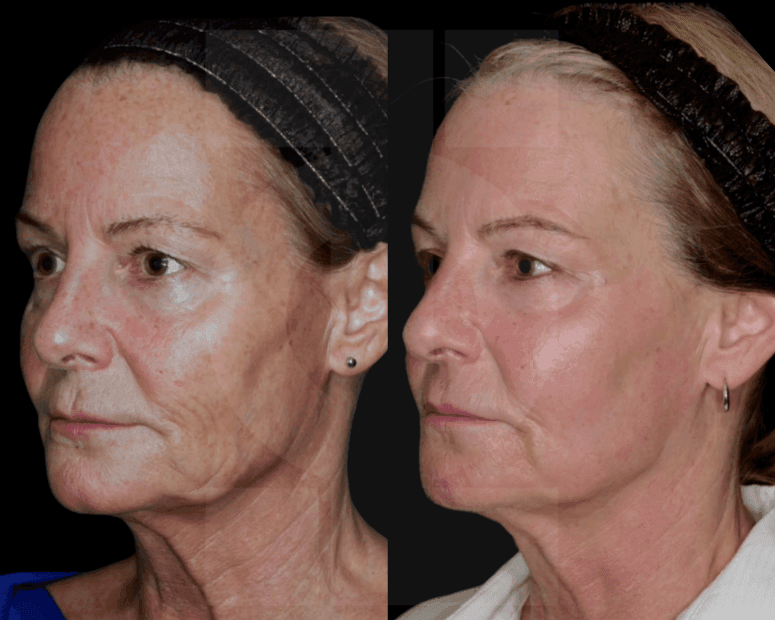
Combination treatment: Endolift, Polynucleotides & JetPeel
Polynucleotides for under-eyes
Polynucleotides improve the delicate under-eye area by thickening the dermis, improving skin quality and supporting microcirculation.
The skin under the eyes is thinner and more fragile than skin elsewhere on the face, making it particularly susceptible to visible ageing. Common concerns include crepey texture, fine lines, dehydration, dark circles, mild puffiness and a persistently tired appearance. Not all under-eye concerns have the same cause. Dark circles can result from pigmentation, vascular visibility, thin skin, shadowing, tear trough hollowing or fluid retention. Polynucleotides cannot correct every cause.

The under-eye area is the most common reason patients come to us for polynucleotides, and it is also where expectations need to be most carefully set. The skin here is thinner and more delicate than anywhere else on the face, which is why it responds well to a regenerative approach and poorly to volume.
What polynucleotides can improve under the eyes
- Crepey, finely lined skin texture
- Dullness and poor skin quality
- Dark circles caused by thin skin showing the vessels beneath
What polynucleotides will not do
- Remove a genuine fat pad herniation, which is a surgical concern
- Correct a hollow tear trough, which needs volume rather than regeneration
- Resolve dark circles caused by pigmentation or by shadowing from bone structure
Understanding which of these is causing your under-eye concern is the single most important part of the consultation. It is also why we will sometimes recommend tear trough filler instead, or a combination of the two.
Can polynucleotides help dark circles?
They can improve dark circles caused by thin skin or poor microcirculation. By thickening the dermis and improving blood flow, they may reduce the visibility of underlying blood vessels. Dark circles caused by pigmentation, structural shadowing or tear trough hollowing may not respond to polynucleotides alone.
Can polynucleotides help eye bags?
They may help mild puffiness by improving microcirculation and supporting lymphatic drainage. They cannot correct true eye bags caused by prominent fat pads or significant skin laxity.
What do polynucleotides do for your skin?
Polynucleotides are designed to improve the quality of the skin itself. They are not intended to change facial shape or replace lost volume.
- Hydration - skin may feel more hydrated and appear plumper
- Elasticity - skin may feel more resilient
- Firmness - skin may feel tighter and more supported
- Texture - rough or uneven texture may become smoother
- Fine lines - superficial lines may appear less prominent
- Crepey skin - thin, crepey skin may appear improved
- Dullness - tired-looking skin may appear brighter

Do polynucleotides really work?
Yes, though results build gradually rather than appearing overnight. Polynucleotides are supported by a growing evidence base, strongest in wound healing, where they have been shown to speed tissue repair. In aesthetic use, studies report improvements in skin texture, hydration and fine lines. The research is still maturing, so honest expectations matter.
The mechanism is well described. Polynucleotides act on adenosine A2A receptors, which stimulates fibroblast activity, supports the formation of new blood vessels and increases production of the extracellular matrix that gives skin its structure. In practical terms, the treatment encourages your skin to repair itself rather than adding volume or restricting movement.
A systematic review of randomised trials found the most consistent benefits in wound healing, with accelerated healing compared with controls. For skin rejuvenation, the published studies report improvements in texture, hydration and scarring, but they involve small numbers of patients and varied treatment protocols. Larger trials are still needed. Importantly, no serious treatment-related adverse events were reported.
Our own clinical experience reflects this. Polynucleotides are most convincing for skin quality, under-eye crepiness and superficial textural scarring, and least suited to anyone hoping for volume or a dramatic change. If that is your goal, we will tell you honestly and suggest something more appropriate. Most patients want to know how quickly they will see a difference. We set out the full timeline, from the first few days to peak results, in our guide to how long polynucleotides take to work.
What areas can be treated?
Polynucleotides can be used on the under-eyes, full face, cheeks, around the mouth, neck, décolletage and hands.
The under-eyes are by far the most common request. The skin there is thin and particularly prone to fine lines, crepiness and dark circles, and it responds well to a treatment that improves the quality of the skin itself rather than adding volume.
Across the full face, polynucleotides are used to improve overall skin quality, texture and hydration. On the cheeks the aim is usually elasticity and firmness, while around the mouth treatment targets fine lines and crepiness.
Below the face, the neck and décolletage are both well suited to treatment, though for different reasons. The neck tends to show thinning skin and fine lines, whereas the décolletage more often shows sun damage alongside general ageing. The hands are frequently overlooked but respond well where skin texture and fine lines are the concern.
What happens during a polynucleotide injection?
Polynucleotides are injected into the skin using a series of small injections across the treatment area. The session is short, and discomfort is generally mild. A topical numbing cream can be applied beforehand if required. Most people can return to everyday activities straight afterwards, while following their practitioner’s aftercare advice.
Your practitioner will prepare the treatment area, then place small amounts of product into the skin using a fine needle. The number and placement of injection points will depend on the area being treated and your individual treatment plan. Your practitioner will explain what to expect before starting.
You may notice small raised bumps at the injection sites immediately afterwards. These are common and usually settle within 24–48 hours. Some redness is also common and may last from a few hours to a day.
Results develop gradually. While some people notice an early improvement in hydration, changes in skin texture and quality build over the following weeks, which is why the timeline matters more than the appointment itself.
Polynucleotide results: what can I expect?
Some patients notice immediate improvement in hydration and radiance. Mild swelling or small bumps at injection sites resolve quickly.
The first visible signs of improved skin texture, hydration and glow appear.
Typically when your second treatment is scheduled.
Fine lines soften, skin elasticity improves and overall skin health reaches its peak. For patients treating acne scars, this is when remodelling becomes most noticeable.
Effects typically last between six and nine months, depending on age, skin condition, lifestyle and treatment area.
How many treatments will I need?
We typically recommend an initial course of three sessions, spaced two to four weeks apart.
The number depends on your skin condition, the treatment area, your individual response and your goals. More significant concerns, or a more dramatic improvement, may require a longer course.
How polynucleotides compare
Are polynucleotides skin boosters?
Polynucleotides are often grouped within the broad category of skin boosters, but they work differently. Hyaluronic-acid-based boosters primarily provide hydration. Polynucleotides are regenerative injectables, supporting cellular repair and collagen production, with hydration as a secondary benefit.
A patient with dehydrated skin may benefit more from a hyaluronic-acid booster. A patient with thin, fragile or damaged skin may benefit more from polynucleotides.

Polynucleotides vs Profhilo
| Polynucleotides | Profhilo | |
|---|---|---|
| Primary mechanism | Regenerative, fibroblast stimulation | Hydration, high concentration HA |
| Key ingredient | Purified DNA fragments, salmon-derived | Hyaluronic acid, 64mg per 2ml |
| Main action | Skin repair and collagen | Deep hydration and plumping |
| Under-eye suitability | Yes | Less commonly used |
| Results longevity | 6–9 months | 6–9 months |
| Best for | Thin, fragile or damaged skin | Dull, dehydrated skin |
Neither is inherently better. The right treatment depends on skin type, concerns and goals.
Read our full polynucleotides vs Profhilo comparison for a closer look at both.
Are polynucleotides better than Botox?
Neither treatment is better. They do different jobs. Botox relaxes the muscles that create expression lines. Polynucleotides improve the quality of the skin itself: its hydration, elasticity and firmness. If your concern is lines formed by movement, Botox is the right choice. If your skin looks thin, crepey or tired, polynucleotides are.
Choose Botox
Botox is a neuromodulator. It temporarily reduces the contraction of selected facial muscles, softening lines caused by movement. Results typically last 3 to 6 months.
- Frown lines
- Forehead lines
- Crow's feet that deepen when animating your face
Choose Polynucleotides
Regenerative action that stimulates collagen and elastin production. Results build over weeks and hold for 6 to 9 months. Read our guide to how long polynucleotides last.
- Crepey texture & skin laxity
- Dullness & loss of resilience
- Fine lines caused by skin thinning
- Delicate under-eye area
Can You Have Both?
Yes, and many of our patients do. The two treatments are complementary rather than competing. Botox reduces the repeated folding that deepens lines over time, while polynucleotides improve the quality of the skin those lines sit in. In most cases, both can be carried out in the same appointment, though Dr Tapan Patel will advise on sequencing during your consultation.
Polynucleotides vs dermal fillers
Polynucleotides improve skin quality at a cellular level and do not add volume. Dermal fillers restore or add volume, define contours and provide immediate visible change. This matters most for the under-eye area. Tear trough hollowing may be better suited to filler. Thin, crepey skin with dark circles may be better suited to polynucleotides.
Are polynucleotides made from salmon DNA?
Polynucleotides improve skin quality at a cellular level and do not add volume. Dermal fillers restore or add volume, define contours and provide immediate visible change.
This matters most for the under-eye area. Tear trough hollowing may be better suited to filler. Thin, crepey skin with dark circles may be better suited to polynucleotides.
Downtime, side effects and aftercare
There is minimal downtime. Most patients return to normal activities immediately after treatment.
Temporary Effects
- Redness at injection sites: a few hours to a day
- Mild swelling: particularly around under-eyes
- Small bumps: resolving within hours to days
- Bruising: typically resolving within a week
- Short-lived tenderness
Less Common Risks
- Infection: rare
- Allergic reaction: rare, particularly with fish allergy
- Asymmetry
- Lumps or nodules
- Prolonged swelling or redness
Aftercare
- Avoid touching the treated area for several hours
- Wait 4 to 6 hours before applying make-up
- Avoid active skincare ingredients (retinoids & acids) for 48 hours
- Avoid strenuous exercise for 24 to 48 hours
- Avoid alcohol for 24 hours
- Avoid saunas, steam rooms and excessive heat for 48 hours
- Protect the treated area with SPF
What happens during consultation?
Your consultation at PHI Clinic is a thorough, in-person assessment covering your concerns and goals, a full medical history review including any fish allergies, a skin and treatment-area assessment, identification of the underlying cause, discussion of alternatives, and a personalised treatment plan with expected results, risks and downtime.
A good consultation may result in a recommendation for a different treatment, or for no treatment at all.
Who is not suitable for polynucleotides?
Polynucleotides are not suitable if you are pregnant or breastfeeding, have an active skin infection in the treatment area, or a known fish allergy. If you have an autoimmune condition, a bleeding disorder, or take blood-thinning medication, treatment may still be possible but needs to be planned properly at consultation.
Treatment is not appropriate if you
- Are pregnant or breastfeeding
- Have a known allergy to fish, as most polynucleotides are derived from purified salmon or trout DNA
- Have an active infection, inflammation or breakout in the area to be treated
Tell us at consultation if you
- Have an autoimmune or connective tissue condition
- Take anticoagulants or have a bleeding disorder (increases bruising risk)
- Have a history of keloid scarring
- Have had dermal filler in the same area recently
- Are due a significant dental or surgical procedure in the coming weeks
Ethical Considerations: Because polynucleotides are derived from fish DNA, some vegan and vegetarian patients prefer to avoid them on ethical grounds. We will always discuss alternatives with you if that applies.
Why choose PHI Clinic for polynucleotides in London
Based at 102 Harley Street, PHI Clinic is led by internationally recognised Medical Director Dr Tapan Patel, who has over 20 years of experience in aesthetic medicine. Our team includes GMC-registered doctors, GDC-registered dentists and NMC-registered nurse prescribers, with every treatment beginning with a personalised assessment.
We do not assume polynucleotides are right for everyone and will only recommend treatment where appropriate. As a CQC-registered clinic and three-time winner of Best Clinic London, we also understand how polynucleotides can be combined with other treatments to support overall skin health.

Polynucleotides near you in central London
PHI Clinic is at 102 Harley Street, London W1G 7JB, a five-minute walk from Oxford Circus and Great Portland Street, seven from Bond Street, and close to Marylebone, Mayfair, Fitzrovia and Regent's Park.
Opening Hours
| Monday & Tuesday | 9:30am – 6:00pm |
| Wednesday & Thursday | 9:30am – 8:00pm |
| Friday | 9:30am – 5:00pm |
| Saturday | 11:30am – 12:30pm |
| Sunday | Closed |
If you are considering polynucleotide treatment, the first step is a consultation with one of our registered practitioners. Call 020 7034 5999 or book online.
Polynucleotide frequently asked questions
Discomfort is generally mild. A topical anaesthetic can be applied beforehand if required, particularly for the under-eye area.
Polynucleotides have a well-established safety profile when administered by a qualified medical practitioner. The main contraindication is fish allergy. All risks are discussed at consultation.
Patients with a known fish allergy, those who are pregnant or breastfeeding, and anyone with an active skin infection in the treatment area. Vegans and vegetarians may prefer to avoid treatment on ethical grounds.
Yes, for superficial textural acne scarring. Polynucleotides help remodel the dermis, smoothing the skin's surface over a course of treatments. Deeper, tethered or ice-pick scarring usually requires a different approach.
After the initial course of three, most patients have a maintenance session every six to nine months.
Yes. They are frequently combined with skin boosters, dermal fillers and energy-based treatments as part of a wider plan. Sequencing is agreed at consultation.
Make-up for 4 to 6 hours, active skincare for 48 hours, strenuous exercise for 24 to 48 hours, alcohol for 24 hours, and heat treatments such as saunas for 48 hours.