
Frown lines: causes and Botox treatment
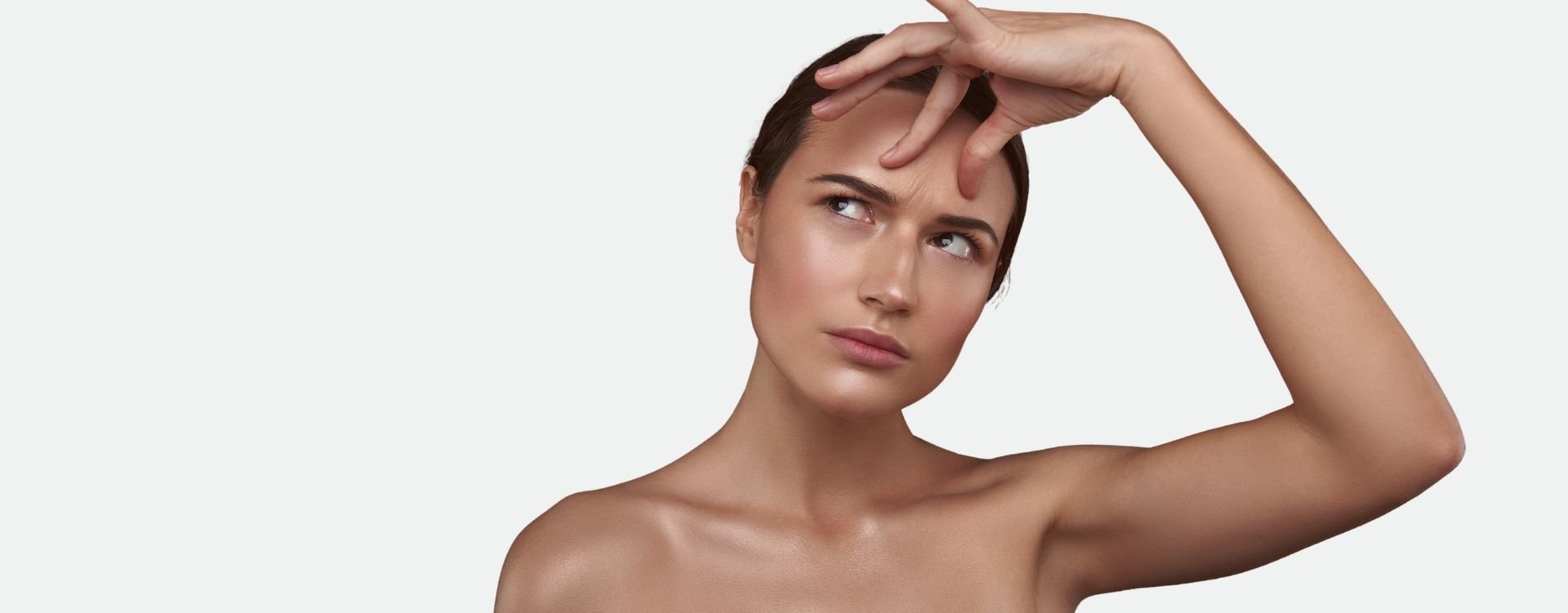
Frown lines, also called glabellar lines or "the 11s", are the vertical creases between your eyebrows. Botox temporarily relaxes the two muscles that cause them, so the lines soften. In the UK it is licensed for this use in adults. Most people notice a change within about a week, and the effect lasts around four months.
- Doctor-led treatment
- Consultation first
- Minimal downtime

Frown lines Botox at a glance
- What it treats
- Vertical lines between the eyebrows
- When you see it
- Generally within a week
- How long it lasts
- About four months for most people
- Cost
- Set at your consultation
At PHI Clinic on Harley Street, Botox London is prescribed and delivered by a doctor-led team, and every treatment starts with a consultation.
What are frown lines?
Frown lines are the vertical creases between your eyebrows. Doctors call them glabellar lines, and many people call them "the 11s". They show when you frown or concentrate, and with time they can stay visible when your face is relaxed.
What causes them. Repeated frowning and squinting use the same muscles again and again, and with age your skin loses collagen and elasticity, so the creases deepen and stay visible at rest.
Two muscles do most of the work: the corrugator supercilii and the procerus. They draw your brows down and together.

Is Botox good for frown lines?
For most people, yes. Botox is licensed in the UK for moderate to severe vertical lines between the eyebrows seen at maximum frown, in adults. In the trials described in the product information, 30 days after treatment:
80%
of treated people (325 of 405) had no or mild frown lines at day 30, against 3% on placebo
89%
of treated people felt a moderate or better improvement, against 7% on placebo
74%
of those with moderate to severe lines at rest had none or mild lines (119 of 161), against 20% on placebo
Trial results from the Botox product information. Your result depends on your muscles, age and how deep your lines are. Results were lower in people over 65. [1]
How Botox treats frown lines
Botox works in three steps, and the rest of your face keeps moving.
The signal
Nerves tell the corrugator and procerus muscles to tighten when you frown.
The block
Botox, a purified protein called botulinum toxin type A, temporarily reduces that signal in the muscles it is placed in.
The result
The muscles frown less strongly, so the skin above them creases less and the lines soften.
What to expect: results and how long they last
How quickly you see a change, and how long it lasts, based on the Botox product information and a pooled analysis of trials [1, 2].
- Treatment day
A short appointment with a small number of precise injections.
- Within about a week
Improvement generally appears.
- Around day 30
The point at which the trials measured results.
- About four months
The median duration in a pooled analysis of four trials was 120 days at maximum frown and 131 days at rest.
- Repeat treatment
Not more often than every three months, according to the product information.
Duration varies from person to person. Your doctor will advise on timing for you.
Deep frown lines: what Botox can and cannot do
Botox works best on lines made by muscle movement, the ones that show when you frown. As the trial figures above show, lines at rest often soften too, but lines that are deeply etched into the skin may not smooth out fully with Botox alone.
For those, a plan can combine Botox with a filler for frown lines, or with a skin-quality treatment. Your doctor will explain which fits you at your consultation. See dermal fillers.
Why do my 11 lines look worse after Botox?
A few things can make the lines look more noticeable for a short time:
- Other muscles working harder. When one muscle is relaxed, nearby untreated muscles can overwork to compensate. A case report of four people described new or exaggerated wrinkles after forehead injections that nearly disappeared by week four without treatment [4]. That report was about forehead treatment and is small, so it cannot be applied to every case.
- The forehead muscle. Some people lift their forehead as they frown. If that muscle is not part of the plan, the lines above the brows can look more obvious [3].
- The effect has not settled or is wearing off. Full effect takes around a week or more, and as the effect fades the lines return.
- A shape change in the brow. In the trials, an outer brow lift (sometimes called a Mephisto or "Spock" brow) was reported as an uncommon effect [1].
If your lines look worse after a few weeks, go back to the person who treated you. They can look at how your muscles move and, if needed, adjust the plan. See what to do if Botox goes wrong. If you also lift your forehead as you frown, your plan may include forehead lines treatment.
Is Botox right for you?
Botox may suit you if you are an adult with frown lines you would like softer and you want to keep your expression.
It is not suitable, or needs particular care, if you:
- have an allergy to botulinum toxin or any ingredient, or an infection where the injections would go
- are pregnant, may become pregnant and are not using contraception, or are breastfeeding. The product information says Botox is not recommended in these situations
- have a condition that affects how nerves and muscles communicate, such as myasthenia gravis or Lambert-Eaton syndrome, or other neurological conditions. These need extreme caution
- take certain antibiotics (aminoglycosides) or other medicines that affect nerve and muscle signals, which can strengthen the effect
- are under 18. Botox is not recommended in under-18s [1]
Your doctor will check your medical history at your consultation. New to Botox? Read the first-time Botox guide.
Risks and side effects
The product information lists the side effects reported in studies of Botox for glabellar lines. In those studies, headache, eyelid drooping (ptosis), injection-site pain and bruising, redness, nausea, a tight feeling in the skin and tingling were each reported as common, meaning more than 1 in 100 and fewer than 1 in 10 people. Swelling around the eyes, blurred vision and an outer brow lift were reported as uncommon [1].
Eyelid drooping is the effect most worth knowing about, because the muscles that lift your eyelid sit close to the injection area. In the product information it appeared a median of 9 days after treatment, and it settles as the effect wears off. The risk is one reason the injection points, depth and amount matter, and why who treats you matters [1].
Very rarely, the effect can spread beyond the treated area. Seek urgent medical help if you have difficulty swallowing, speaking or breathing.
Your frown lines practitioners




Aftercare: the first hours and days
In the first few hours, avoid rubbing or pressing the treated area, lying flat, and heavy exercise. Contact the clinic if something does not feel right. See Botox aftercare for the full guide, and what not to do after Botox.
How to choose who treats you
Always have a consultation with the person who will do the treatment before you decide. The NHS suggests asking how many of the procedures they have done, what training and qualifications they have, whether they belong to a relevant professional association, what the most common complications are, what aftercare you can expect, and what happens if something goes wrong. It also advises avoiding group treatments, vouchers, mobile services in homes or hotels, and practitioners who only advertise on social media [5].
Check that your practitioner is registered with the right body (the General Medical Council for doctors, the Nursing and Midwifery Council for nurses, the General Dental Council for dentists) and ask who prescribes your Botox. Dr Tapan Patel is registered with the GMC, number 4368285.
Before and after frown lines

Frown lines Botox: your questions
Yes, for most people. Botox is licensed in the UK for moderate to severe vertical lines between the eyebrows seen at maximum frown, in adults. In the trials described in the product information, 80% of treated people were assessed as having no or mild lines after 30 days, compared with 3% given placebo. Your result depends on your muscles, age and how deep your lines are.
Around four months for most people. In a pooled analysis of four trials, the median duration in people who responded was about 120 days at maximum frown and 131 days at rest. The lines then return gradually, and some people find the effect fades a little sooner or later. The product information says treatments should not be more frequent than every three months.
A few things can cause it. Nearby muscles can work harder to compensate for the treated ones, as described after forehead injections, where the changes nearly disappeared by week four. The treated muscle may not have settled yet, or the effect may be wearing off. An outer brow lift is an uncommon effect seen in the trials. If it continues beyond a few weeks, go back to your practitioner, who can assess it.
Most people describe a brief pinch or sting. The injections use a very fine needle and the appointment is short. Injection-site pain was reported as a common effect in the trials. If you are nervous, say so at your consultation and ask what can be done to keep you comfortable.
Improvement generally appears within a week. The trials measured results at 30 days, so judge your result at around a month rather than in the first week.
Botox softens lines by limiting the muscle movement that creates them. Some doctors use small doses in people who have not yet developed deep lines, to reduce frowning and slow their progress, but the evidence for prevention is more limited than for treating existing lines, and the product licence covers treating lines in adults. Your doctor will say whether it makes sense for you.
Often, but it depends on how you move. In a small ultrasound study of 16 people, 3 lifted their forehead muscle as they frowned, and in those people the forehead lines did not improve with the standard frown-line injections and needed extra treatment in the forehead muscle. Your doctor will look at how you frown before planning. Some people also add treatment for crow's feet or a Botox brow lift.
There is no single right age. Botox is licensed for adults and is not recommended under 18. Most people start when frown lines begin to bother them. Data for people over 65 is more limited, and results were lower in that group in the trials. Your doctor will advise on what suits your face and goals.
Other areas we treat with Botox
References
- BOTOX 50 Allergan Units, powder for solution for injection. Summary of Product Characteristics, electronic medicines compendium. medicines.org.uk
- Glogau R, Kane M, Beddingfield F, et al. OnabotulinumtoxinA: a meta-analysis of duration of effect in the treatment of glabellar lines. Dermatol Surg 2012;38(11):1794-1803. PubMed
- Anatomical Injection Guidelines for Glabellar Frown Lines Based on Ultrasonographic Evaluation. Toxins 2021. PubMed Central
- Kang SM, Feneran A, Kim JK, et al. Exaggeration of wrinkles after botulinum toxin injection for forehead horizontal lines. Ann Dermatol 2011;23(2):217-221. PubMed
- NHS. Choosing who will do your cosmetic procedure. Page last reviewed 23 June 2023. nhs.uk
Location
PHI Clinic
102 Harley Street,
London,
W1G 7JB,
United Kingdom
Tel: 02070345999
Opening Hours
Monday & Tuesday - 9:30am to 6:00pm
Wednesday & Thursday - 9:30am to 8:00pm
Friday - 9:30am to 5:00pm
Saturday - 11:30am to 12:30pm
Sunday - Closed
Opening times can change, if your appointment is outside of these times please contact the clinic for confirmation.