

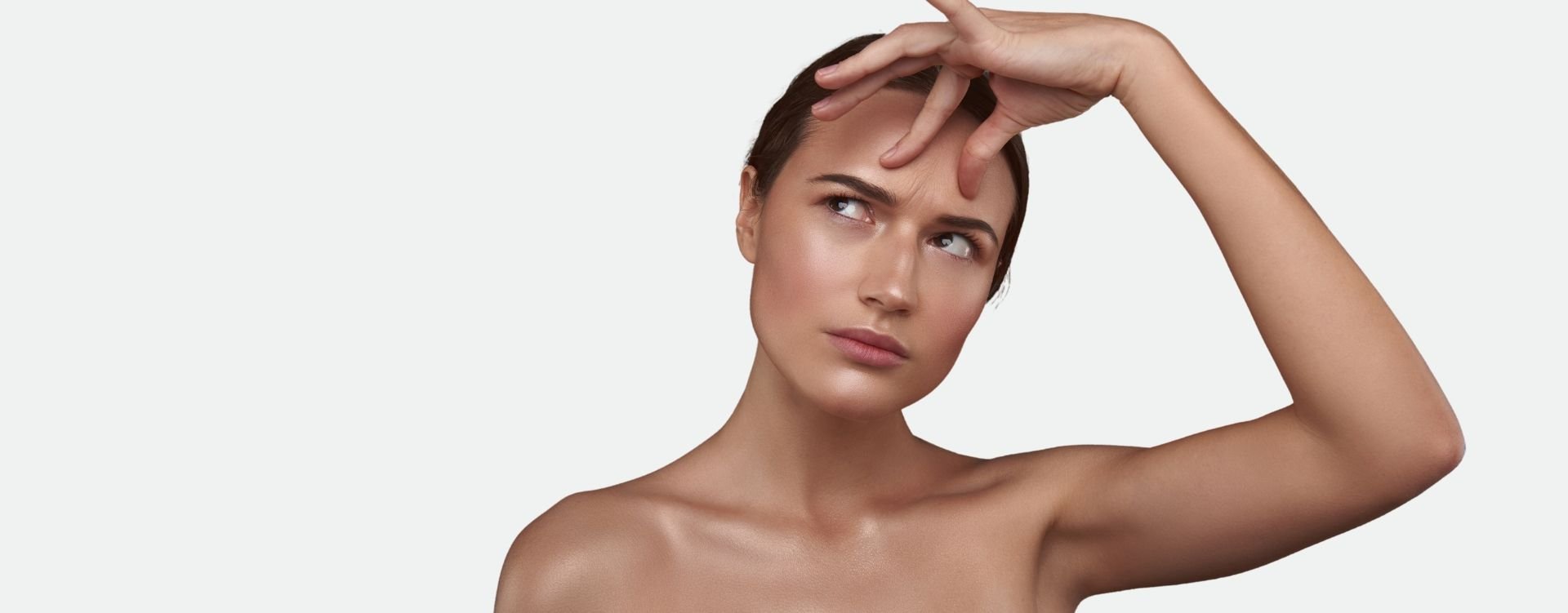

What are frown lines?
Frown lines are a natural part of the ageing process, but these types of wrinkles can also develop due to other factors like sun exposure, genetics, and lifestyle choices such as smoking. Over time, the repeated contraction of the muscles between the eyebrows causes the skin to lose its elasticity and develop creases or lines.
They typically appear as two parallel lines or a single deep furrow and are caused by repetitive muscle movements, such as frowning, squinting, or concentrating. These can be treated effectively and quickly at our Botox Clinic London, with deeper static creases additionally softened by injectable dermal fillers.


How to get rid of frown lines?
These lines can vary in severity, ranging from mild to deep, and they may become more pronounced with age. Frown lines, or glabella lines, can contribute to an aged or tired appearance, as they can make a person look perpetually angry or worried.
Various treatment options are available to reduce the appearance of frown lines. These include:
- Topical creams: Some over-the-counter creams and serums contain ingredients like retinol or peptides that may help improve the appearance of fine lines and wrinkles, including frown lines.
- Dermal fillers: Injectable dermal fillers, such as hyaluronic acid-based products, can be used to fill in deep frown lines, making them less noticeable. The results are immediate and can last several months or more, depending on the specific filler used.
- Laser resurfacing: Laser treatments can stimulate collagen production and promote skin rejuvenation. Fractional laser resurfacing can target frown lines specifically, reducing their appearance over time.
- Anti-wrinkle injections: Botulinum toxin type A, commonly known as Botox injections London, is a popular non-surgical treatment for frown lines. It temporarily paralyses the muscles responsible for frowning, smoothing out the wrinkles. The effects of Botox for frown lines typically last for a few months before another treatment is needed.
- Chemical peels: This treatment involves applying a chemical solution to the skin, which exfoliates the outer layer and encourages new skin cell growth. Superficial peels can help improve the appearance of frown lines, but multiple treatments may be required for optimal results.
What can cause frown lines?
- Repetitive facial expressions – repeatedly frowning causes furrows between the brows, which can deepen over time as skin stops ‘bouncing back’ into place.
- UV exposure – frequent exposure to the sun’s damaging rays can destroy collagen and elastin in the skin, two proteins that contribute towards elasticity. This makes skin more likely to sag and form wrinkles.
- Smoking – nicotine in cigarettes narrows blood vessels, which in turn deprives the skin of vital nutrients and oxygen. It also damages collagen and elastin fibres in the skin, reducing the ability of the skin to ‘bounce back’ into place after facial expressions.
- Ageing – a natural part of ageing is the breakdown of collagen and elastin in the skin, as well as the loss of subcutaneous fat, which gives skin a plump and firm look. As these disappear, skin sags and wrinkles start appearing.
- Diet – scientists suggest that eating too much processed sugar can cause increased collagen breakdown, reducing skin’s elasticity.
Frown lines, or worry lines, are the vertical lines that form between the eyebrows due to repetitive muscle activity, such as frowning or concentrating. Over time, these dynamic movements can lead to deeper lines and wrinkles, impacting the overall facial appearance. While factors such as ageing, UV exposure, and lifestyle choices accelerate the development of these static lines, tailored treatments can help restore a smoother complexion.
At PHI Clinic, we offer a range of non-invasive treatments to target forehead furrows, deep creases, and the appearance of bunny lines and smile lines. Options like Botox and dermal fillers work to soften the appearance of lines, smooth the forehead, and rejuvenate the skin. For patients whose concern also includes overall skin laxity and texture around the brow and forehead, complementary bio-remodelling treatments such as Profhilo can help improve hydration, firmness, and skin quality alongside targeted line reduction. Maintaining hydration and a healthy lifestyle also plays a key role in reducing the chances of developing deeper wrinkles.
Your frown lines practitioners




Safe and effective treatment
Your safety is our top priority and making our patients feel welcomed and reassured when entering PHI Clinic. To ensure maximum standard of patient care, all of our treatments are only ever carried out by our experienced and highly qualified team, who receive regular in-house and external training from industry experts.
At PHI Clinic we do not offer same day treatment as initial consultation to ensure patients have time to reflect on their bespoke treatment plan before choosing to proceed.

Frown lines frequently asked questions
While natural methods may not completely eliminate deep frown lines, they can help improve their appearance and prevent further progression. Here are some tips for reducing frown lines naturally:
- Protect your skin from the sun: Sun exposure can accelerate skin ageing and the formation of wrinkles, including frown lines. Use a broad-spectrum sunscreen with a high SPF daily, wear protective clothing, and avoid excessive sun exposure, especially during peak hours.
- Stay hydrated: Drinking an adequate amount of water helps keep your skin hydrated and plump. Proper hydration can improve the appearance of fine lines and wrinkles, including frown lines.
- Maintain a healthy lifestyle: Adopting a healthy lifestyle can have a positive impact on your skin's overall health. Get regular exercise, eat a balanced diet rich in fruits, vegetables, and omega-3 fatty acids, and avoid smoking and excessive alcohol consumption.
- Facial exercises: Performing facial exercises may help strengthen the muscles in the forehead area and potentially reduce the appearance of frown lines. One simple exercise is to place your index fingers just above your eyebrows and apply gentle upward pressure while simultaneously trying to frown. Repeat this exercise several times a day.
- Facial massage: Massaging the forehead and glabella area can improve blood circulation and promote relaxation of the facial muscles. Use your fingertips to apply gentle upward strokes on the forehead for a few minutes each day.
Glabellar lines, also known as the "11 lines" or "frown lines," are the vertical wrinkles or creases that form between the eyebrows on the forehead. The glabella is the area of skin located just above the nose and between the eyebrows.
These lines are called glabellar lines because they specifically refer to the wrinkles in the glabellar region. When a person frowns, squints, or concentrates, the muscles between the eyebrows contract, and over time, these repetitive muscle movements cause the skin to lose its elasticity and form creases or lines.
For all Injectable treatments, these are carried out by our medical professional team of Nurses and Doctors
Depending on what treatment your practitioner deems suitable, treatment can take from 30- 60 minutes.
Botox in this area can last 3-5 months. Dermal fillers from the Juvéderm range can last anywhere between 12 - 15 months. But as everyone metabolises filler differently, this really does vary from person to person. During your follow up appointment, we’ll discuss next steps.
Frown lines are not necessarily permanent, but they can become more prominent and deeper over time if left untreated. Frown lines are typically a result of repetitive facial muscle movements, such as frowning, squinting, or concentrating, combined with the natural aging process. As we age, the skin gradually loses its elasticity and collagen, making it more prone to developing wrinkles and lines. Frown lines can start as fine lines and gradually deepen into more noticeable creases over the years.
While frown lines may not be completely eliminated without medical interventions, there are treatments available to reduce their appearance. Botox injections and dermal fillers are commonly used to temporarily soften and diminish the appearance of frown lines. These treatments can provide noticeable results, but they are not permanent solutions. It's important to note that individual results may vary, and the longevity of any treatment's effects can differ from person to person.
Location
PHI Clinic
102 Harley Street,
London,
W1G 7JB,
United Kingdom
Tel: 02070345999
Opening Hours
Monday & Tuesday - 9:30am to 6:00pm
Wednesday & Thursday - 9:30am to 8:00pm
Friday - 9:30am to 5:00pm
Saturday - 11:30am to 12:30pm
Sunday - Closed
Opening times can change, if your appointment is outside of these times please contact the clinic for confirmation.