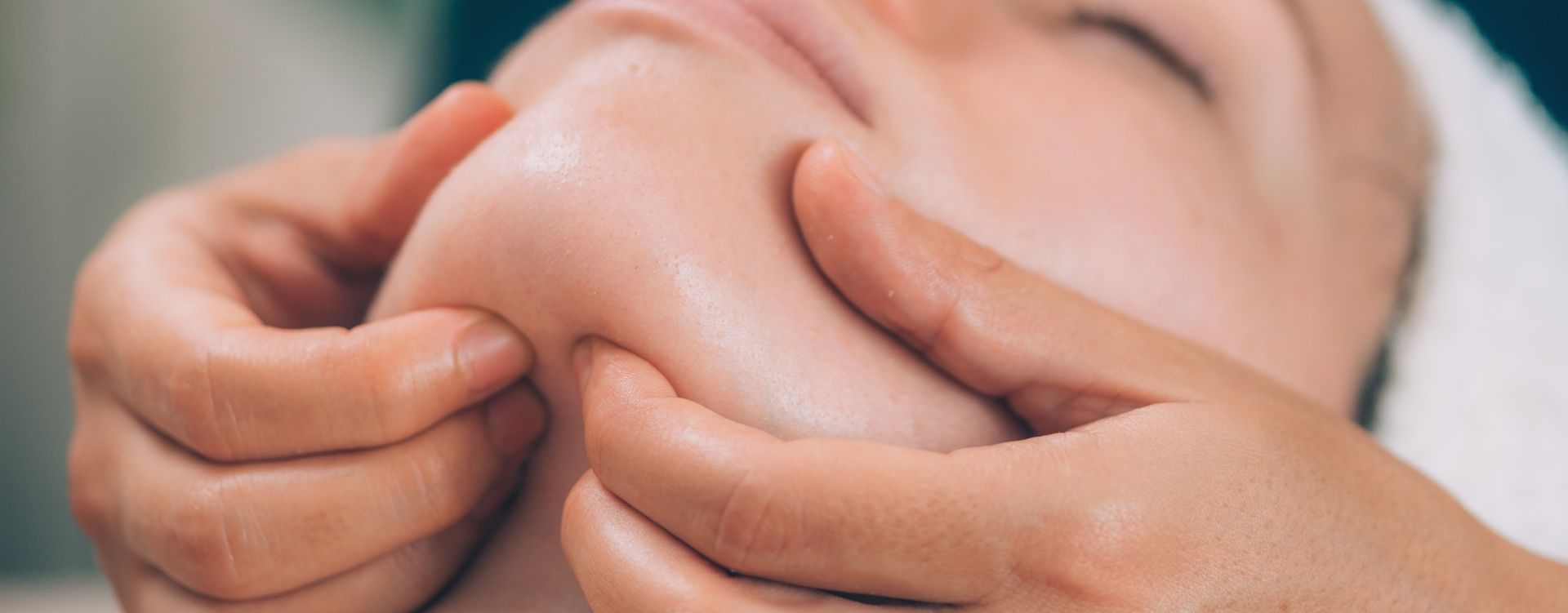
What causes jowls
Jowls form when the soft tissue of the mid-face loses its support and descends past the jawline. Sagging jowls are the visible result of two underlying changes.
Volume loss and fat migration. The fat pads of the cheek thin and drop, so the weight that used to sit high on the face now sits along the jaw.
Collagen and elastin decline. Collagen production slows and skin elasticity reduces, so the skin can no longer hold that tissue in place, and sagging skin follows the tissue down.
Several things accelerate both:
- Smoking. Tobacco destroys collagen, and nicotine narrows blood vessels so the skin receives fewer of the nutrients it needs to repair itself.
- Sun exposure. UV damage degrades collagen over the long term, usually showing up as fine lines and wrinkles well before it shows up as jowls. It happens in short unprotected periods, not just in sunburn.
- Alcohol. Dehydration reduces the body's ability to deliver nutrients to the dermis and to heal existing damage.
- Diet. Excess sugar makes collagen brittle. Rapid weight loss stretches skin and then removes what was filling it, leaving laxity behind.
- Genetics. Both whether you develop jowls and when tend to run in families.
The non-surgical options
There is no single jowl lift. There are several minimally-invasive treatments that address different parts of the problem, and the right plan usually combines two rather than relying on one.
Energy-based skin tightening. Endolift is minimally invasive, delivering laser energy beneath the skin through microscopic fibres to tighten tissue and stimulate collagen, while reducing the small fat pockets along the jaw that contribute to a double chin. Ultraformer uses focused ultrasound to lift at a deeper level without breaking the surface. Both work gradually, over weeks to months, because they rely on the body producing new collagen rather than on anything being added.
Dermal filler. Where the problem is descended volume rather than loose skin, rebuilding support higher in the face lifts what has fallen below it. This is the principle behind the liquid facelift: dermal fillers placed at specific structural points to restore the scaffolding, rather than filling the jowl itself. Results typically last 12 to 18 months.
Muscle and tissue stimulation. EMFACE combines radiofrequency with muscle stimulation, addressing tone as well as skin quality.
Skin rejuvenation treatments. These will not lift anything, but improving skin texture and thickness means the skin holds its shape more effectively, and it makes every other result look better.
Which one suits which jowl
A rough guide, though it is not a substitute for an assessment of your own facial anatomy.
Early jowling with reasonable skin quality. Energy-based tightening alone often does enough, and it is the least invasive route.
Jowls driven by mid-face volume loss. Filler placed high, in the cheek and along the jaw, restores the facial contours that have dropped and achieves more than treating the jowl directly ever will.
Jowls with significant skin laxity. A combination, usually tightening first and volume second, because adding weight to skin that cannot hold it makes the problem worse.
Heavy, established jowls with loose neck skin. This is where non-surgical treatment runs out of road. A non-surgical facelift at our London clinic will soften the appearance, but it will not remove tissue, and if you want the result a facelift gives, that is what you need.
What non-surgical treatment cannot do
Worth saying plainly, because it is where most disappointment comes from.
Non-surgical treatment does not remove skin. A facelift lifts and excises tissue; the minimally-invasive treatments on this page either tighten what is already there or replace what has been lost. Where there is a significant excess of skin, tightening it produces a modest improvement rather than a transformation.
Recovery time is minimal with all of them, which is a large part of the appeal, but minimal downtime is not the same as an instant result. Energy-based treatments build over three to six months as collagen forms, so anyone expecting a visible change the following week will be disappointed by a treatment that is in fact working normally.
PHI Clinic does not perform surgical facelifts. Where that is the honest answer, we say so.
How long a non-surgical jowl lift lasts
It depends on which route you take.
Filler results last around 12 to 18 months, and the hyaluronic acid continues to support the tissue throughout. Energy-based tightening depends on the collagen your own body produces, so the result builds for several months and then gradually declines with continued ageing, usually holding for a year or more before maintenance is worth considering.
Neither stops the ageing that caused the jowls in the first place. Both buy time, both work better when started earlier, and both suit ongoing facial rejuvenation rather than a single appointment. That is the argument for treating moderate jowling rather than waiting for it to become severe.
Book a jowl assessment in London
The most useful thing a consultation does here is tell you which of the two problems you have, because skin laxity and volume loss look similar in the mirror and respond to completely different treatments.
Book a consultation and our practitioners will assess the jawline, the mid-face and your skin quality, and tell you honestly whether a non-surgical facelift in London will achieve what you are hoping for.