
What are bunny lines?
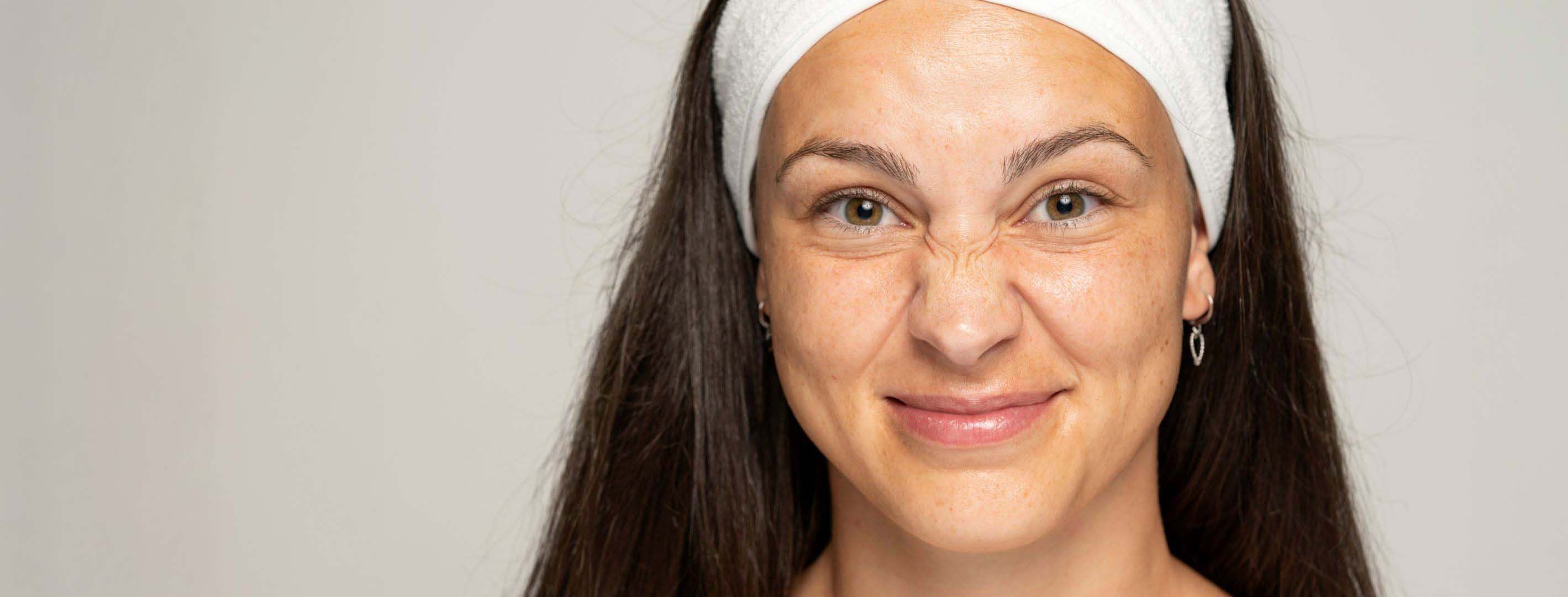
Bunny lines are small, diagonal wrinkles that form on the bridge and sides of the nose when you smile, laugh or scrunch your face. Sometimes called nose lines, nose wrinkles or scrunching lines, they may extend into the bunny triangle, the area between the bridge of the nose and the inner eye. At PHI Clinic they are treated with Botox treatment in London.
They are caused by repeated contraction of the nasalis muscle and the surrounding facial muscles during expression. This makes them dynamic lines: visible on movement first, and only later at rest. Over time, repetitive movements combined with natural ageing, reduced collagen production, and sun damage can make these lines appear deeper, even when the face is at rest.
While harmless, bunny lines can accentuate other wrinkles such as crow's feet, frown lines, or horizontal lines across the upper face. At PHI Clinic our practitioners assess how the muscles affecting other areas of the face interact with the nasalis muscles. Using small, precise doses of anti-wrinkle injections (Botox), we relax overactive muscle activity while maintaining natural facial expression and symmetry.

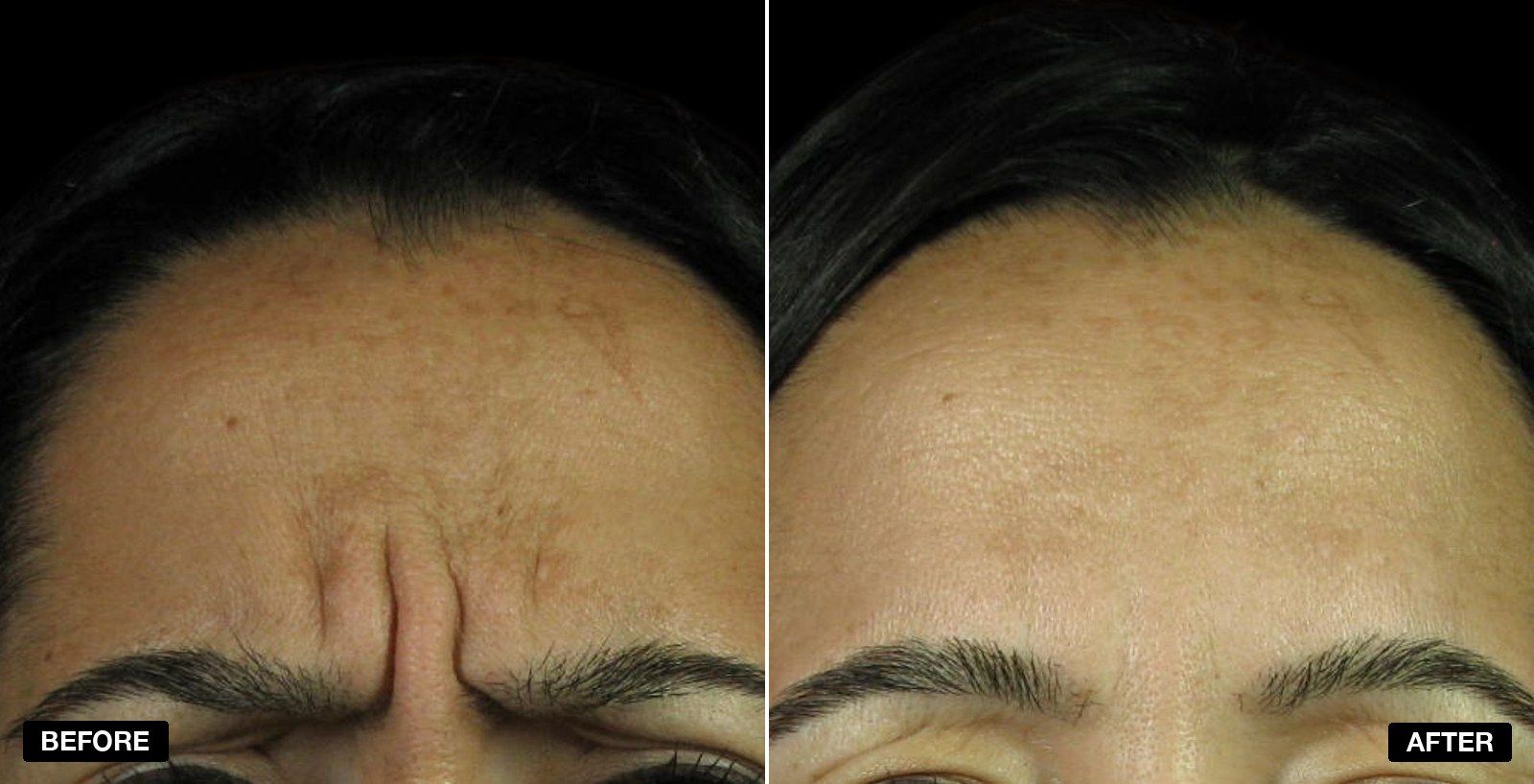
Before and after bunny lines
What can cause bunny lines?
Bunny lines develop gradually through years of repetitive movements and lifestyle factors that affect the skin and underlying connective tissue.
- Ageing: natural collagen and elastin breakdown reduces skin elasticity, making wrinkles more prominent.
- Facial expressions: frequent nose movement, particularly when smiling or laughing, deepens creases with time.
- Botox compensation: bunny lines can appear or become more noticeable after forehead or glabellar (frown line) Botox, because the surrounding muscles compensate for the relaxed areas by working harder.
- Sun exposure: UV rays damage collagen fibres and weaken the skin's structure.
- Smoking: nicotine restricts blood flow and oxygen, reducing elasticity and slowing healing.
- Skin quality: dehydration or insufficient skincare can increase visible expression lines around the midface.
- Facial structure: the strength and position of the nasalis muscle differs between people, which is why some develop bunny lines far earlier than others.
At our Harley Street clinic, bunny lines Botox uses expertly placed anti-wrinkle injections to relax the nasal muscles and smooth the overlying skin. This non-invasive procedure reduces the depth of wrinkles and restores a smoother appearance without downtime.
How to Get Rid of Bunny Lines
The most effective anti-wrinkle treatment for bunny lines is Botox. Small doses of a neuromodulator are injected into the nasalis muscle on each side of the nose to temporarily relax the movement that causes the creasing. As movement in the treatment area reduces, the skin softens and existing fine lines become less visible.
Results typically appear within 5 to 7 days, with full results at around two weeks, and last 3 to 4 months depending on your facial activity, metabolism and treatment plan. Most people maintain the effect with treatment sessions two or three times a year.
The dose is deliberately small. The nasalis sits close to the muscles controlling the upper lip and smile, so the aim is to soften the crease without affecting expression. Your injector assesses how your face moves as well as how it rests, and at our Harley Street clinic that follows a skin assessment of the whole upper face rather than the nose alone. Bunny lines are rarely treated in isolation, so our expert practitioners plan personalised treatments around what they find.

Can you treat bunny lines without Botox?
Not as directly, but there are options, and the right one depends on whether the line is dynamic or static.
For deeper static lines that remain visible at rest, practitioners may suggest dermal filler treatment, laser rejuvenation or skin-boosting treatments. Filler uses hyaluronic acid to restore volume and support the surrounding connective tissue, creating smoother transitions between the nose lines, crow's feet and frown lines. Skin resurfacing treatments improve overall texture and help repair sun damage, which makes any line sitting on that skin less obvious. These cosmetic treatments work on the skin rather than the muscle, so they change how a line looks without changing what causes it.
Good skincare and daily SPF will not remove bunny lines, but they slow the collagen loss that makes them deepen. For a line that only appears on movement, that may be all you need for now.
Is bunny line Botox worth it?
It depends on what is bothering you, and we would rather you asked the question before booking than after.
It tends to be worth it if the lines stay visible when your face is relaxed, if they have become more noticeable since having Botox elsewhere, or if they sit alongside other aesthetic treatment areas you are already maintaining. Bunny lines are usually treated as part of a wider plan rather than on their own, which is also why they are easy to overlook. Cost follows that logic: they are treated as a single Botox area, so where they are done alongside the forehead or frown lines the price reflects the number of areas rather than the bunny lines alone.
It is probably not worth it yet if the lines only appear when you scrunch your nose and are invisible otherwise. Treating a purely dynamic line early is a legitimate preventative choice, but it is a choice rather than a necessity, and we will tell you so.
Aftercare and recovery
Following treatment you may notice mild redness, swelling or slight bruising at the injection site. These temporary side effects usually subside within a few hours. You can resume normal activities straight away, though it is best to avoid strenuous exercise, heat exposure and facial massage for 24 hours.
Our full aftercare advice covers the first 48 hours in detail. Following it helps maintain results and supports healing of the connective tissue beneath the skin, which is what gives a rejuvenated appearance rather than a treated one.
Your bunny lines practitioners




Safe and effective treatment
Your safety is our top priority and making our patients feel welcomed and reassured when entering PHI Clinic. To ensure maximum standard of patient care, all of our treatments are only ever carried out by our experienced and highly qualified team, who receive regular in-house and external training from industry experts.
At PHI Clinic we do not offer same day treatment as initial consultation to ensure patients have time to reflect on their bespoke treatment plan before choosing to proceed.

Bunny lines frequently asked questions
Prevention isn’t always possible since bunny lines form from natural facial movements. However, early anti-wrinkle injections, daily SPF use, and a healthy skincare routine can help slow their appearance.
Sometimes. When nearby areas like the forehead or crow’s feet are treated, the muscles in the nose can become more active, making bunny lines appear stronger. This can be easily balanced with low-dose Botox.
Only a small amount is required. Our medical practitioners tailor dosage and placement on each side of the nose to ensure balanced, natural results.
Yes. Bunny line Botox only relaxes the overactive nasalis muscles, so you’ll retain natural movement and full expression.
Not necessarily. They’re more related to muscle activity than accelerated ageing, but reduced collagen with age can make them more noticeable.
Most patients see visible smoothing within 5–7 days, with optimal results at around two weeks.
Yes. Many people pair it with dermal fillers or skin boosters to enhance hydration and improve the overall appearance of the midface.
Discomfort is minimal. The injections are quick and typically described as a mild sting.
Yes. Bunny lines affect both men and women. Dosage and placement are adjusted for each individual’s facial anatomy and muscle strength.
Mild redness, swelling, or small bruises at the injection site can occur but fade quickly. Serious reactions are extremely rare when performed by experienced practitioners.
Location
PHI Clinic
102 Harley Street,
London,
W1G 7JB,
United Kingdom
Tel: 02070345999
Opening Hours
Monday & Tuesday - 9:30am to 6:00pm
Wednesday & Thursday - 9:30am to 8:00pm
Friday - 9:30am to 5:00pm
Saturday - 11:30am to 12:30pm
Sunday - Closed
Opening times can change, if your appointment is outside of these times please contact the clinic for confirmation.