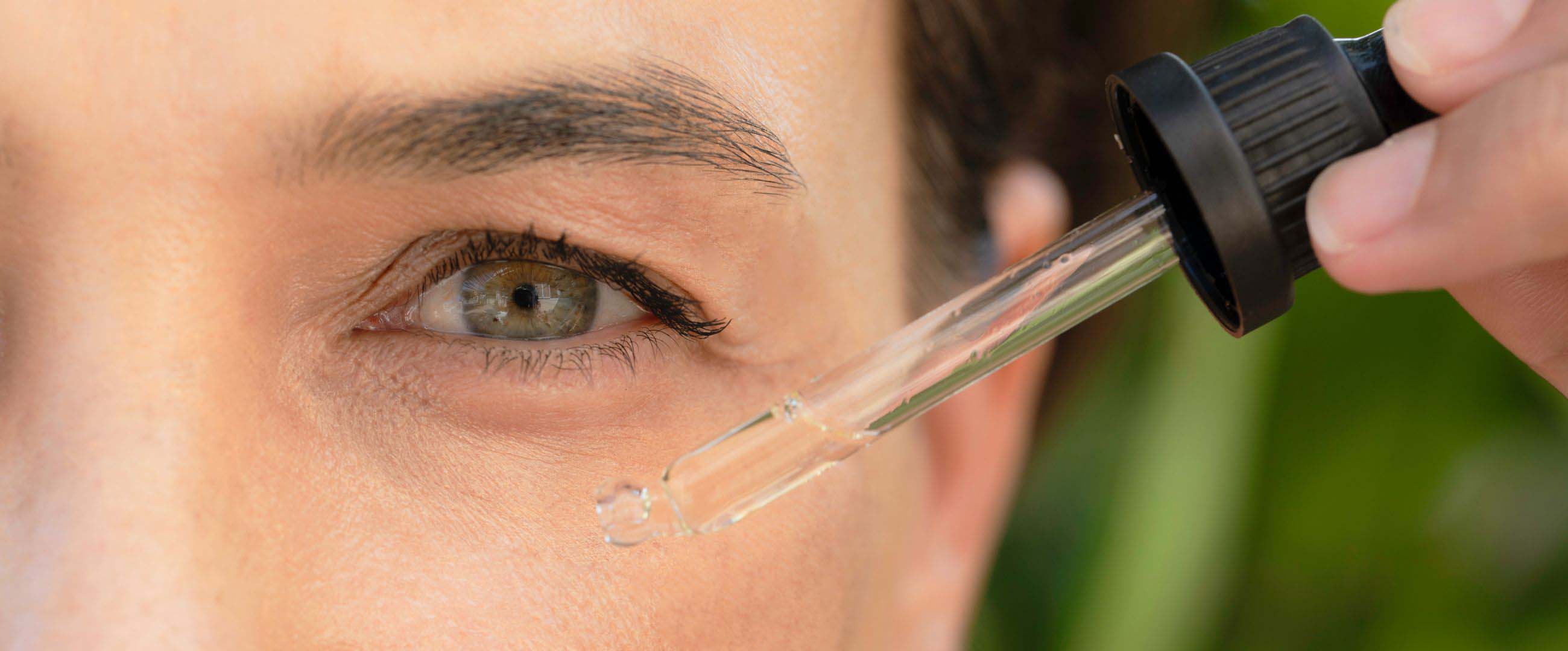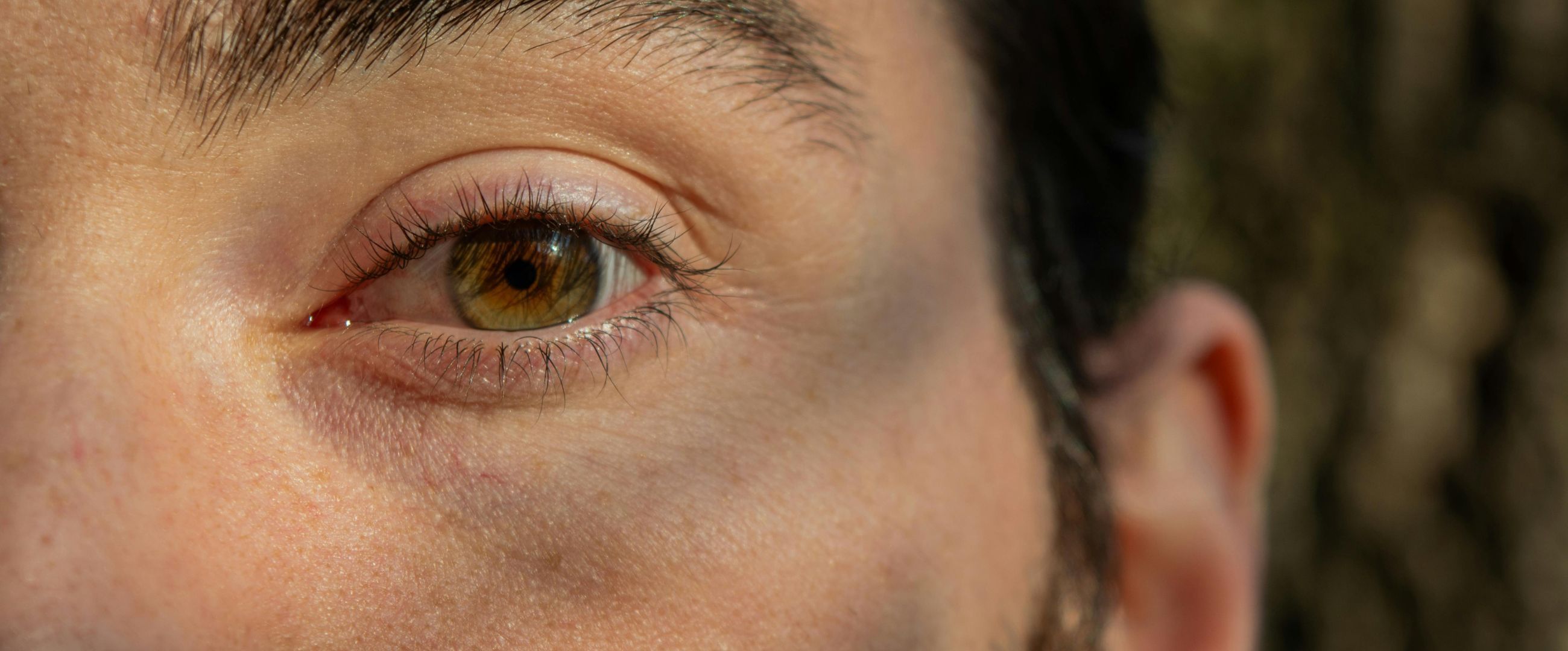
Can you put filler in the upper eyelid?
Yes, but it is not a treatment most practitioners offer, and it is worth understanding why before you book it anywhere.
The upper eyelid sits directly over the orbit. The skin there is the thinnest on the body, the tissue plane is shallow, and the margin for error is measured in millimetres rather than centimetres. A great many injectors will not treat the area at all, which is a reasonable position for them to take.
At PHI Clinic, upper eyelid filler is performed by Dr Tapan Patel, our Medical Director. Dr Tapan is one of just six Global Key Opinion Leaders worldwide for Allergan, the company behind Juvederm, and he teaches injectable technique in house to the doctors and nurses who work at the clinic.
On this particular area, who is holding the syringe matters more than anything else about the treatment.
What is upper eyelid filler?
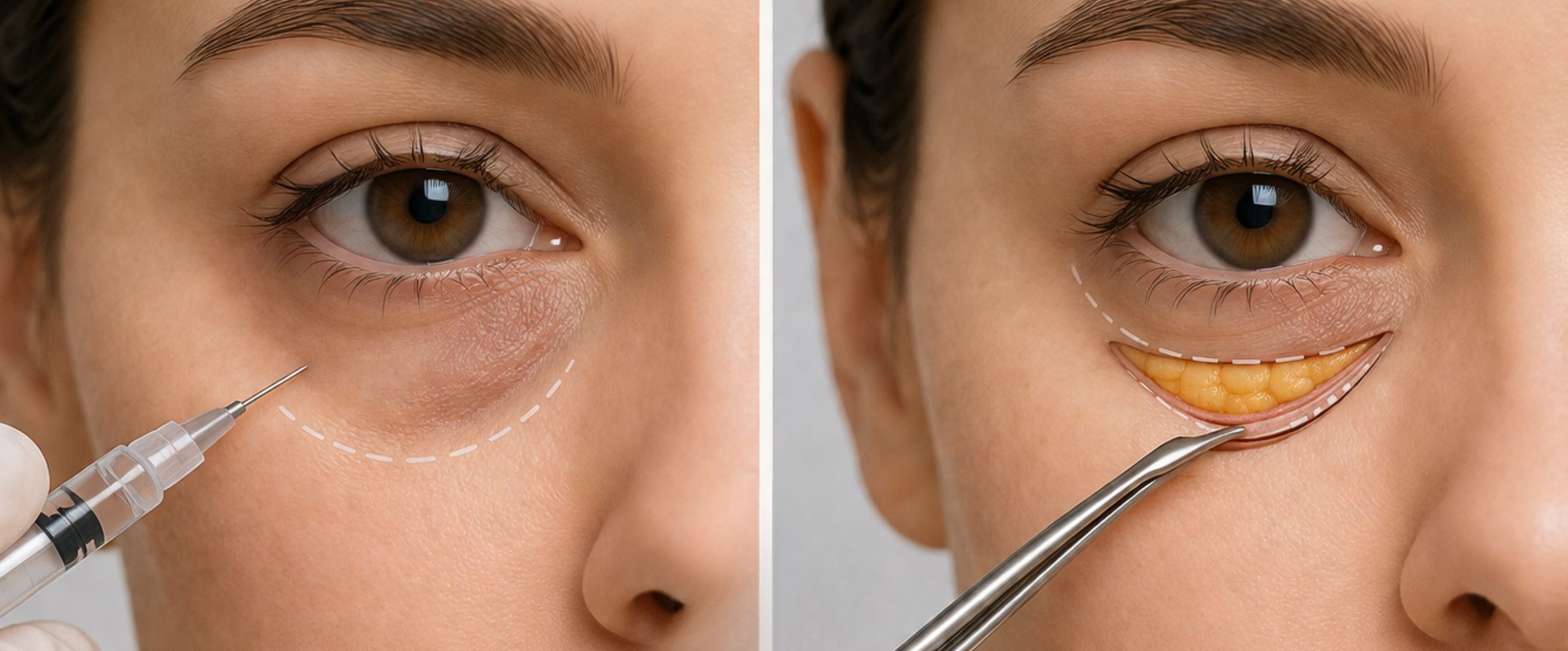
Your doctor uses a needle to pierce the surface of the skin, then passes a long cannula through that entry point to place small amounts of filler into the hollow above the eye, restoring the volume that has been lost.
A cannula has a blunt tip rather than a sharp one. It moves through tissue by pushing structures aside instead of piercing them, which improves safety and precision in a delicate area and tends to produce less swelling and bruising than a needle would.
The volumes used here are small. Upper eyelid correction is a matter of fractions of a millilitre placed accurately, not of filling a space, and restraint is a large part of what makes the outcome look natural rather than puffy.
What upper eyelid filler cannot do
This is worth setting out plainly, because the two most common upper eyelid concerns are different problems that need different treatments, and they are frequently confused.
Filler adds volume. It restores a hollow. It does not remove anything, and that sets four clear limits.
It does not lift a hooded eyelid. Hooding is excess skin draping over the lid, not lost volume beneath it. Adding filler to a hooded lid can make the hood look heavier rather than lighter.
It does not treat loose or crepey skin. Fine wrinkles, skin laxity and loose skin on the lid are a skin condition rather than a volume one, and they are addressed with resurfacing or tightening treatments rather than with filler.
It does not reduce fat. If there is fullness or a pad of fat on the upper lid, filler is the wrong direction entirely.
It does not treat the under eye. Dark circles, eye bags and under-eye hollows sit on the other side of the orbital rim and are a different treatment altogether. The tear trough regions beneath the eye are treated with under-eye filler, so if what bothers you is tear trough hollows or sunken eyes below the lash line rather than hollowing above the lid, that is the page to read instead of this one.
Where hooding is the concern, a Botox brow lift can raise the outer brow and open the eye slightly. Where there is a significant amount of excess skin, surgery is the honest answer. A blepharoplasty removes skin, which no injectable treatment can do, and you will be told that at consultation rather than sold a treatment that will not do what you want it to.
What is the best filler for hollow eyes?
At PHI Clinic we use Juvederm to treat upper eyelid hollowness. Juvederm is the market leading hyaluronic acid range, produced by Allergan.
Hyaluronic acid is a sugar molecule that occurs naturally in the body, which is why it integrates well with your own tissue. The gel restores volume above the eye by attracting and holding water in the area where it is placed, and it is the only category of filler that can be dissolved if you are unhappy with the result.
For the upper eyelid specifically, product choice matters as much as technique. Eye fillers are not interchangeable with the products used elsewhere on the face. A softer, less hydrophilic gel is used here than would be used in the cheeks or the chin, because a product that draws in a lot of water will look swollen rather than restored on an eyelid.
Our dermal filler treatments in London use the Juvederm range throughout, from facial rejuvenation across the cheeks and jawline to the far smaller volumes used around the eye, and every injector at the clinic is trained in house by Dr Tapan.
Who will be injecting the filler, and is it right for you?
Upper eyelid filler at PHI Clinic is carried out by Dr Tapan, our Medical Director. It is the only treatment on our list that one person performs exclusively.
The treatment suits people who have lost volume in the upper eyelid over time, where there was previously more fullness there than there is now. Restoring something that has gone tends to look natural, because the face is being returned to a shape it used to hold.
It is a different proposition if the hollowing has been there since youth. Where the upper lid has always been deep set, there is often less underlying bone structure to support added volume, and the risk of an unnatural result is higher. In those cases your doctor may advise against treatment, and that advice is worth more than a procedure that would not have suited you.
This is why an in-depth consultation with one of our highly qualified cosmetic doctors comes first. Suitability for this treatment is assessed in person, not over the phone.
Why the upper eyelid is one of the highest-risk sites for filler
Most clinics will not write this down, because it reads like a reason not to book. It is the opposite. It is the reason to be particular about where you go.
The periocular area shares its blood supply with the eye itself. Product placed into a vessel here can travel, and the recognised complications include visual ones. The same is true of the area between the brows and of the nose, and those three sites are consistently flagged in the medical literature as the ones that demand the most care.
These events are uncommon. They are not theoretical, which is why the protocols matter more here than almost anywhere else on the face:
- Detailed working knowledge of facial anatomy and of the safe planes in the upper lid
- Small volumes, placed slowly, with a blunt cannula rather than a needle
- A medical practitioner who recognises the early signs of a problem
- Hyaluronidase held on site, ready to use without delay
Every treatment at our Harley Street clinic is performed by a GMC-registered doctor.
What to expect on the day and afterwards
The appointment is short. Most of it is assessment and planning. The injection itself takes a matter of minutes.
Numbing cream is applied first. The Juvederm products used also contain local anaesthetic, so discomfort is usually described as mild.
You will see the change immediately, though not the final one. Mild swelling, redness or bruising is normal in the first day or two.
The result settles over about two weeks as the gel integrates with the surrounding tissue. This is the point at which the treatment should be judged, and it is why a follow-up appointment is part of how we work rather than an optional extra.
Downtime is minimal. Most people return to normal activities the same day.
How long does upper eyelid filler last?
Dermal filler at PHI Clinic lasts between 9 and 24 months depending on the area treated, with areas that move constantly, such as the lips and the mouth, at the shorter end of that range.
Upper eyelid results typically last up to 18 months. Because the filler is placed deep and in small quantities, and because the area carries less muscular movement than the lower face, periocular results tend to hold well.
It is also reversible. Hyaluronic acid filler can be dissolved with hyaluronidase if you decide you would rather not keep the result, which is a meaningful reassurance on an area as visible as this one.
How much does upper eyelid filler cost?
Dermal filler treatment in London at PHI Clinic starts from £400. Your exact cost depends on the product used and the amount required, both of which are confirmed at consultation before anything is booked.
Book a consultation
Filler can rejuvenate a hollow upper lid convincingly, but only where hollowing is the actual problem. It is a small treatment with a large margin for getting it wrong, and the single most useful thing you can do is have the area assessed properly before committing to anything.
Book a consultation with us, or fill in the contact form and one of our team will come back to you.
At that appointment, your doctor will assess whether the hollowing above your eye is something filler can improve, whether another treatment would serve you better, and what a realistic result looks like on your face. If the answer is that this treatment is not right for you, you will be told so.
To read more about the full range of dermal fillers in London available at PHI Clinic, including products, pricing and who will treat you, visit our dermal fillers page.