What each one actually does
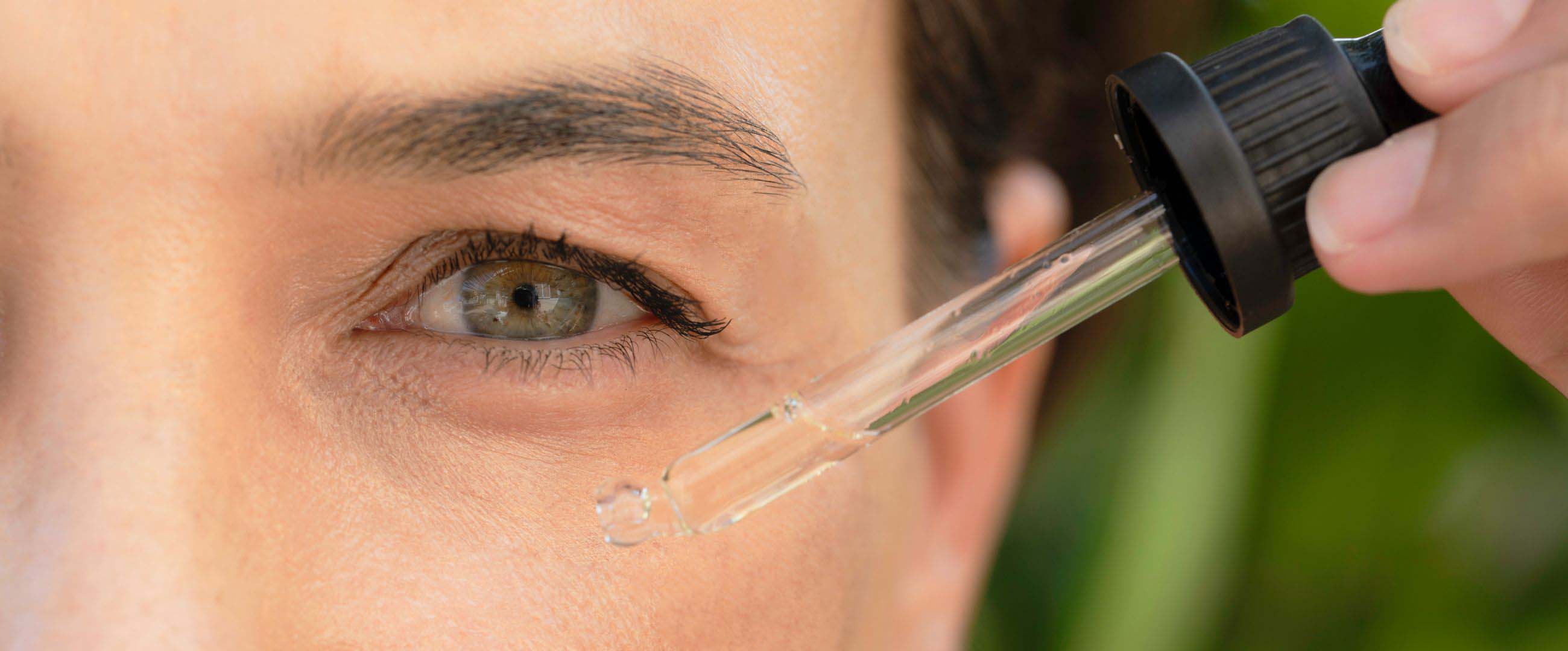
Tear trough filler adds volume. A hyaluronic acid dermal filler is placed deep against bone to soften a hollow and smooth the transition between the lower eyelid and the cheek. It is a 30-minute appointment with minimal downtime, the change is visible immediately and settles at around two weeks, and the result lasts roughly 12 to 18 months. It is also reversible. If you dislike it, it can be dissolved.
Lower blepharoplasty removes or repositions excess. Fat pads are reduced or moved, eyelid skin is tightened, and the contour of the lower lid is reset. It is surgery, usually performed under local anaesthetic, with a real recovery period and a result that lasts years rather than months. It is not reversible.
One adds, the other takes away. Filler is the lower-commitment option and the undoable one. Surgery does something no injectable can, which is take tissue out. That is why they are not interchangeable, and why the assessment matters more than the preference. Treatment results from either depend far more on choosing correctly than on the procedure itself.
Why filler does not fix under eye bags
This is the part worth being blunt about.
An under eye bag is orbital fat pushing forward through a weakening membrane, or fluid, or saggy skin sitting in a fold. It is too much tissue, not too little.
Filler adds tissue. Placed into or beneath a bag, it increases the fullness that was already the problem, and because hyaluronic acid attracts water it can also increase the puffiness. The area ends up heavier rather than smoother, and because the filler product persists for a year or more, so does the result.
Filler placed below a bag can also emphasise it, by building up the ledge the bag sits on.
This is not a failure of the product. It is a treatment used for the wrong indication.
What tear trough filler is designed to treat
Under eye concerns often develop gradually. A shadow appears where there was once smoothness, or the area looks slightly sunken in certain lighting, and the face reads as tired even when energy levels have not changed.
That pattern usually reflects volume loss and reduced collagen production in the tear trough itself, rather than anything sitting on top of it.
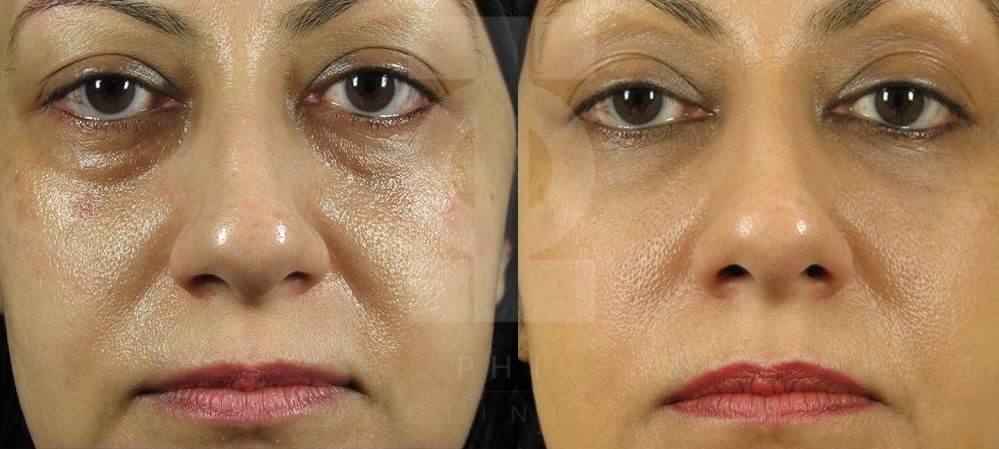
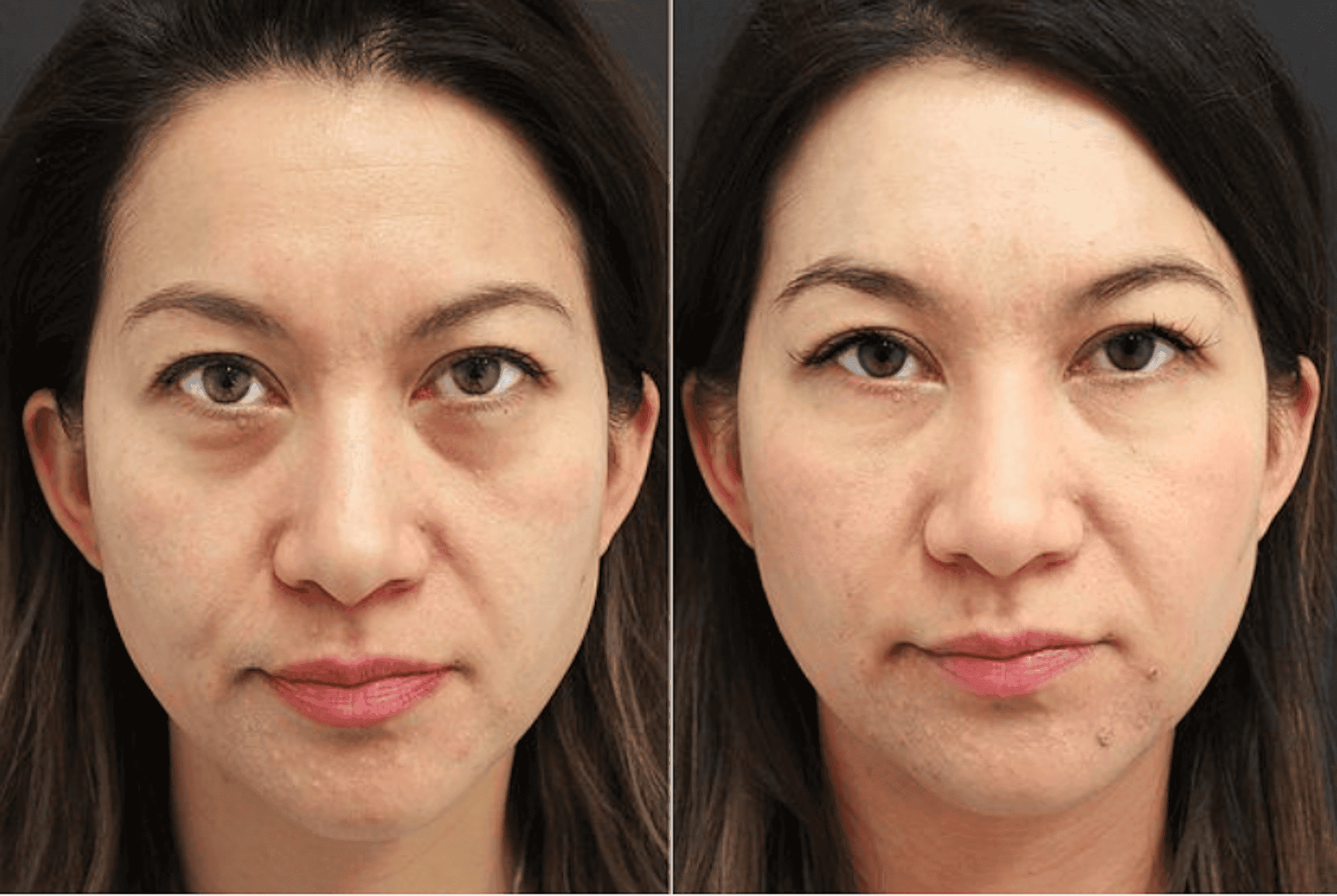
Where hollowness is the dominant feature, tear trough filler at our London clinic restores the transition between lid and cheek and the area looks more rested without looking treated. Those patients generally do very well, and because hyaluronic acid fillers are adjustable and reversible, under-eye filler injections can be built up gradually until the result is right.
What filler will not do is remove under eye bags, tighten skin or correct skin laxity.
What blepharoplasty is designed to treat
For other patients the under eye area does not look hollow, it looks heavy. The fullness is present on waking and still there at the end of the day, unchanged by sleep, hydration or skincare.
Lower blepharoplasty addresses that directly. Fat is removed or repositioned, skin is tightened where needed, and the contour is improved by reduction rather than addition.
Worth clarifying, since the term covers two procedures: this article is about the lower lid. Eyelid surgery on the upper eyelids treats hooding and heaviness above the eye, which is a separate concern with a separate assessment.
Lower eyelid surgery is a bigger undertaking than an injectable. There is a recovery period, bruising and swelling that take time to settle, and the result is permanent in a way filler is not. In exchange it does something no injectable can, which is remove tissue.
Patients suited to surgery often find that under-eye fillers give them very little, or make the area fuller than it already was.
Non surgical blepharoplasty: the middle ground
A lot of people arrive having searched for non surgical blepharoplasty, wanting the result of surgery without the surgery. It is worth being clear about what that phrase does and does not mean.
There is no injectable that removes a fat pad. Nothing non-surgical replicates what blepharoplasty does.
What does exist are cosmetic treatments that work on the skin and the tissue rather than the fat:
- Skin tightening and resurfacing. Laser resurfacing, Endolift and Ultraformer stimulate collagen and tighten lax skin. Where the complaint is crepey eyelid skin and mild laxity rather than a defined fat bulge, these can improve the area meaningfully.
- Mid-face support. Treating the cheek rather than the eye sometimes improves the under eye area more than treating the eye would, because it restores the support beneath it.
- Skin quality treatments. These will not change contour, but thicker, better-quality skin conceals what is underneath it more effectively.
As a non-surgical alternative these suit some people and not others. Where there is a significant fat pad, they will not do the job, and we will say so. Facial rejuvenation around the eye works best when the treatment matches the cause rather than the preference.
How to tell which one you need
A few practical questions.
Does it change through the day? Puffiness that is worse on waking and better by evening has a fluid component. Fat pads look the same at any hour.
Does it improve when you lie down or look up? Hollowing often becomes less obvious. A fat bulge tends not to.
Is the area sunken or raised? Run a finger gently across it. A groove is a hollow. A ledge is a bag.
Has it been there since your twenties? Structural hollowing often has. Bags usually develop later.
Do photographs taken in soft light look much better? Shadow-driven problems change dramatically with lighting. Volume-driven ones change less.
None of this replaces an assessment by an experienced practitioner, but it will usually tell you which conversation you are having.
Assessment and honest referral
Effective under eye treatment depends more on diagnosis than on technique, and the most useful thing a clinic can tell you is sometimes that it is not the right place.
At PHI Clinic tear trough consultations assess facial anatomy, eyelid structure and long-term outcome rather than starting from a treatment and working backwards. Safety in this area comes from that assessment as much as from injecting technique, and in facial aesthetics generally the under eye is where the gap between the two shows most. Where filler is unlikely to help, or where a fat pad means surgery would achieve more, we say so and refer rather than treating and hoping.
Having no surgical practice of our own to fill is precisely what makes that advice worth having.
Tear trough consultation in London
If the area is sunken or shadowed, tear trough filler treatment in London may well be the answer, subject to assessment.
If it is heavy, puffy and dominated by fat pads, blepharoplasty probably is, and we will point you in that direction.
If it is a mixture, which it frequently is, the sequence matters and that is worth a proper conversation before either option is chosen.
Book a consultation and our team will tell you which of the two you are actually dealing with.