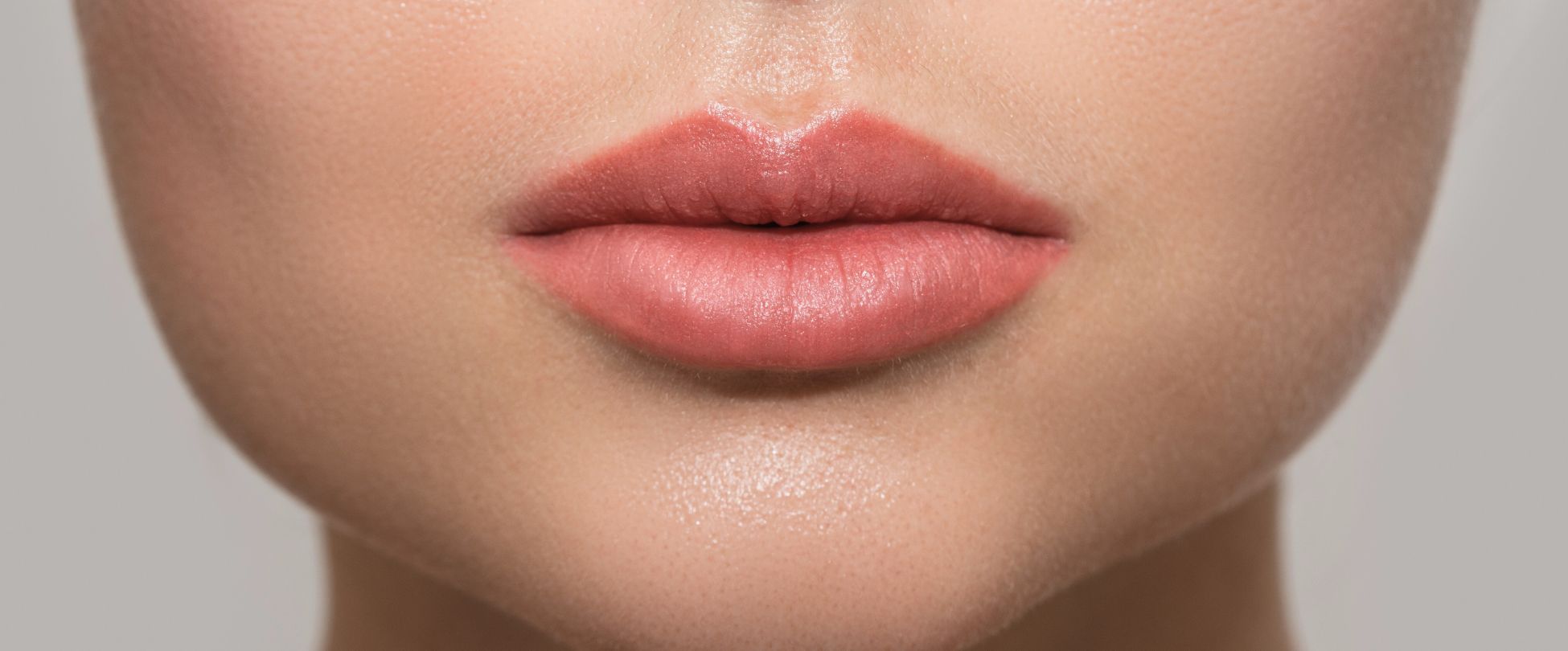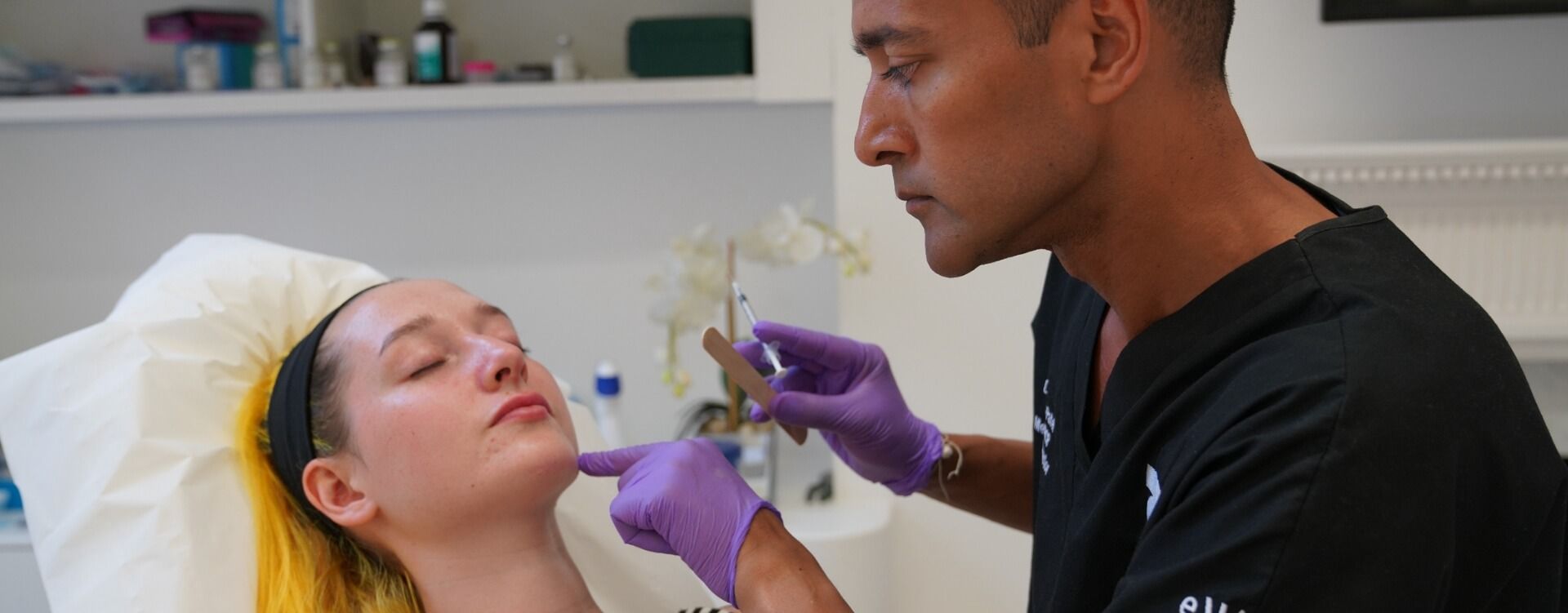
Lip filler swelling stages, day by day
How much you swell depends on the filler type, the volume placed and your own tissue, so the lip filler stages below describe a typical course rather than a guarantee.
Immediately after treatment. Your lips will already look fuller than the final result. Some of that is filler and some is simple trauma from the lip injection itself. Mild tenderness and small raised areas at the injection sites are normal.
Day one, the first 24 hours. Swelling builds rather than settles. This surprises people who expect the worst to be over when they leave the clinic, but it is inflammation doing its job rather than anything going wrong. Lips may feel tight, firm and slightly numb.
Days two to three, the peak. This is as swollen as it gets. Lips can look noticeably uneven at this stage, and one side is often more swollen than the other. Definition around the cupid's bow frequently disappears altogether under the swelling and returns as it settles. All of that is normal and none of it tells you anything about the final result. Do not judge your lips now, and do not book anything social.
Days four to seven. The steep decline, and the most visible part of the healing process. Most swelling resolves in this window, and by the end of the first week your lips look broadly like themselves again. Any bruising is fading from purple towards yellow.
Week two. Residual swelling has gone and the filler has begun to integrate with the surrounding tissue. For most people this is the end of the recovery period proper.
Weeks three to four. The final result. The filler has fully settled, softened and taken on the movement of your own lips. This is when a review is worth having and when any small adjustment should be considered, not before.
How long does lip filler take to settle?
Two weeks for the swelling, four weeks for the result.
Those are the two halves of the lip filler healing timeline, and conflating them causes most of the disappointment in the first month. Swelling is gone at around fourteen days. Integration, where the hyaluronic acid takes up water and settles into the tissue so the lips move naturally, continues for up to four weeks.
Anyone judging their lip filler treatment in London at the one week mark is judging a work in progress. Anyone still unhappy at four weeks has a real observation worth raising with their practitioner.
Recovery experience varies more than people expect, and comparing yours against someone else's on social media is the quickest route to unnecessary worry.
Filler placed in the lips does not last as long as dermal fillers placed in the cheeks or jaw, because the lips move constantly and are well supplied with blood. Expect around nine to eighteen months, and how long lip filler lasts explains what moves that range.
Lip filler bruising
Bruising is less predictable than swelling. Some people bruise after every treatment and some never do, and it has more to do with your own vessels than with technique. A skilled lip filler injector will work around visible vessels where they can, which reduces the risk without ever removing it.
Where bruising does happen it follows the usual course: it appears within the first day or two, darkens, then fades through purple and green to yellow over roughly seven to ten days. It is most visible at each injection site rather than across the whole lip.
Two things genuinely make it more likely. Alcohol in the 24 hours either side of treatment, and blood-thinning medication or supplements, including aspirin, ibuprofen, fish oil, vitamin E and ginkgo. Never stop prescribed medication for cosmetic procedures, but do tell your practitioner what you take so they can plan around it.
How to reduce lip filler swelling
The lip filler aftercare tips that genuinely reduce swelling are few, and almost all of them apply only to the first day or two.
Use a cold compress, not ice directly on the skin, for short periods in the first 24 hours. It works, and it is the single most useful thing you can do.
Sleep propped up on an extra pillow for the first two nights. Lying flat allows fluid to pool in the face overnight, which is why swelling often looks worst first thing in the morning.
Avoid strenuous exercise for 24 to 48 hours. Raising your heart rate increases blood flow to the face and makes both swelling and bruising worse.
Skip makeup and lip products for at least 12 hours to keep the injection sites clean.
Leave your lips alone. No pressing, massaging or testing the firmness with your fingers, which is tempting and achieves nothing except introducing bacteria.
Avoid heat for the first 48 hours: saunas, steam rooms, hot yoga and sunbeds all worsen swelling.
What does not help, despite what you may read, is drinking extra litres of water. Normal hydration is sensible. Beyond that, hyaluronic acid binds water already present in the tissue and you cannot influence it by drinking more.
When swelling is not normal
The lip filler healing process is uneventful for the overwhelming majority of patients. A small number of signs mean something else, and they are worth knowing precisely because everything above tells you not to panic.
Call your clinic the same day if you have:
- Pain that is increasing rather than decreasing after the first 24 hours
- Skin that looks white, blanched, dusky or mottled, on the lips or around them
- Swelling that is worsening after day three rather than improving
- A hard lump that does not soften, or a lump appearing later rather than immediately
- Signs of infection: spreading heat and redness, or feeling unwell
- Any change in vision
The first two matter most. Blanching or mottled skin with disproportionate pain can indicate a vascular occlusion, where filler has affected a blood vessel. It is uncommon, it is treatable, and it is treatable quickly rather than eventually, which is the entire reason for knowing the signs.
Any competent clinic would far rather take a call that turns out to be nothing. Practitioners at PHI Clinic on Harley Street would always rather hear from you unnecessarily than late.
Your review appointment
The useful time to assess your lips is at four weeks, not at four days.
By then the swelling has gone, the filler has settled and what you are looking at is the result. If something still needs adjusting, that is the lip filler appointment at which to raise it, and our practitioners will tell you honestly whether an adjustment will achieve what you want.
Book a lip filler consultation
If you are considering fuller lips, the most useful thing a consultation does is set your expectations against your own lips, so you know what day two should look like for you rather than for someone on social media.
Book a consultation to discuss lip filler in London with a practitioner who performs these aesthetic treatments daily and will talk you through the first fortnight before anything is injected.