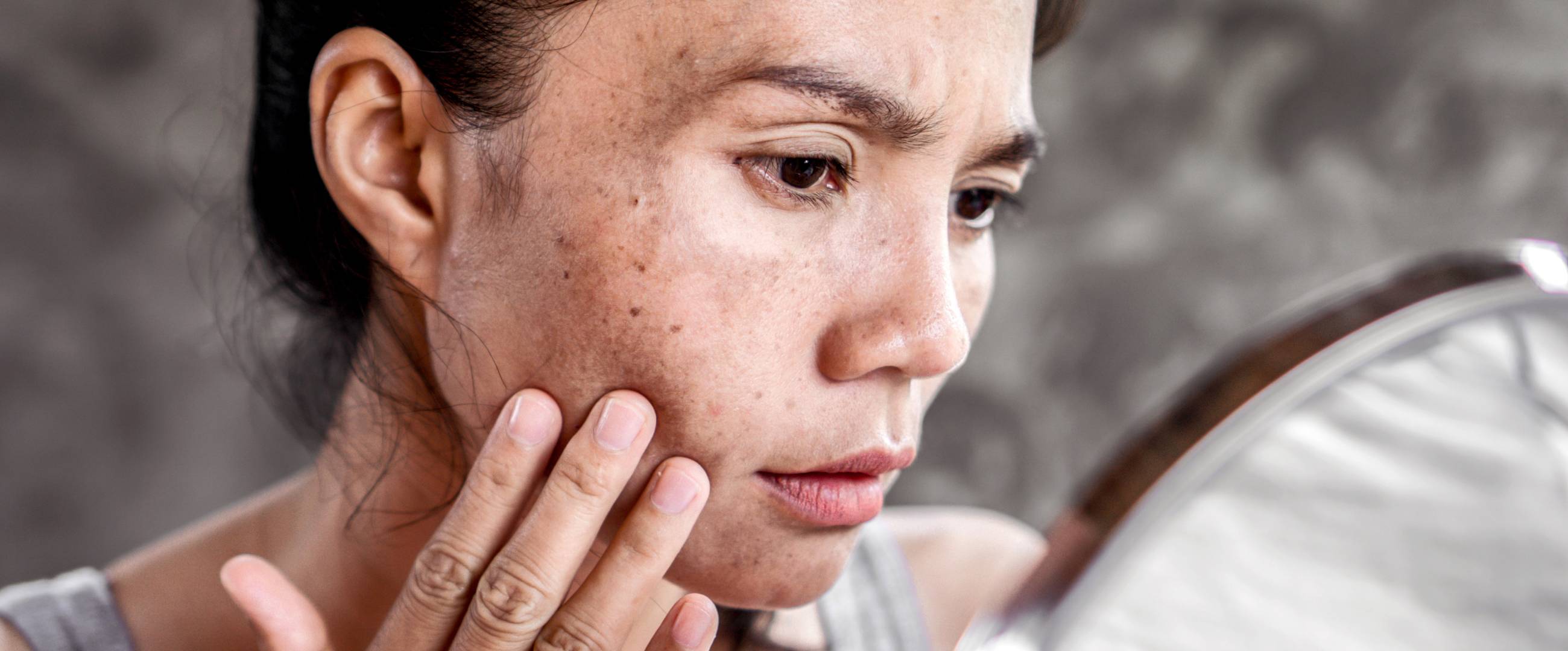
What Causes Hyperpigmentation in Darker Skin Tones?
In darker skin tones, inflammation or trauma (such as acne, bug bites, eczema or even skin lesions) can lead to the overproduction of melanin, resulting in dark pigmentation. This condition is known as post-inflammatory hyperpigmentation (PIH) and is especially common in Fitzpatrick skin types IV to VI.
Other triggers include:
- Hormonal fluctuations (melasma)
- Excessive sun exposure
- Certain medications or cosmetic procedures
- Underlying health conditions or skin disorders
Because melanin production is naturally higher in black skin and other melanin-rich complexions, the risk of developing darker pigmentation from common conditions is significantly increased.
What Does Hyperpigmentation Look Like on Dark Skin?
In melanin-rich skin, hyperpigmentation typically appears as brown, greyish, or black patches. These uneven skin tone changes may appear flat and can vary in size or distribution across the face or body.
Many patients arrive at our clinic after trying over-the-counter topical creams or home remedies with little success. In some cases, these can make the issue worse, especially when the wrong acids, lightening agents, or harsh exfoliants are used without supervision from a medical professional.
Why Some Treatments Can Do More Harm Than Good
When it comes to darker skin types, not all treatment methods are safe. High-strength glycolic acid peels, traditional ablative laser therapy, or strong retinoids can irritate the skin and lead to adverse effects such as hypopigmentation, redness, or even scarring.
That’s why any effective treatment option must be chosen carefully, ideally under the guidance of an experienced practitioner who understands how to treat dark-skinned patients.
Gentle Yet Effective Treatments That Work
At PHI Clinic, we focus on skin with a bespoke approach that addresses the root cause and skin sensitivity. Safe treatment options include:
- Prescription Topicals: Products containing azelaic acid, niacinamide, hydroquinone (used short-term), and retinoids help regulate melanin production and fade dark spots.
- Chemical Peels: Gentle acids like mandelic or lactic acid are better suited to darker skin, exfoliating without causing irritation.
- Microneedling: Helps fade patches of hyperpigmentation and acne scars by encouraging natural skin healing and collagen production.
- LED Light Therapy: supports hyperpigmentation treatment by calming inflammation and promoting a more even skin tone. We often combine this with iS Clinical skincare or complement it with UltraClear for more targeted results.
These options can also help improve related issues like dry skin, dullness, and uneven texture.
When to Consider Specialist or Combination Therapies
If pigmentation is more persistent or widespread, combination therapy may be recommended. Options include:
- Radiofrequency microneedling for deeper layers of darker pigmentation
- Laser therapy using skin-safe wavelengths for melanin-rich skin
- Skin boosters to support hydration and healing
These cosmetic treatments are particularly helpful in managing darker spots, sun spots, and pigmentation related to a medical condition or age spots.
How Soon Will You See a Difference?
Results take time, especially when treating deeper pigmentation. Most people begin to notice improvement within 4 to 6 weeks, with ongoing results over 3 to 6 months depending on the severity and the treatments used.
Darker skin tones require extra care with any intervention. That’s why every treatment begins with a full consultation to assess your skin, medical history, and lifestyle. Side effects like temporary redness or flaking are common, but risks like worsening pigmentation are rare when treatments are performed by skilled professionals.
It’s important to manage expectations realistically. Great skin is a journey, not an overnight fix.
Keeping Pigmentation Away: Prevention and Aftercare
Post-treatment care is essential to keep pigmentation from returning. We recommend:
- Broad-spectrum sunscreen (SPF 50+) daily, even indoors
- Hydrating skincare to support the skin barrier
- Avoiding picking spots or irritation to reduce the risk of PIH
- Regular reviews with your practitioner to refine your routine
Preventive treatments like gentle peels and maintenance skincare are also key for long-term success.
Choosing the Right Clinic for Your Skin Tone
It matters who you trust with your skin. At PHI Clinic, our practitioners are highly experienced in treating all skin tones and understand the nuance of working with melanin-rich skin.
Your treatment plan will always be bespoke, evidence-based, and designed with your skin health and long-term results in mind.
Let’s Find What Works for You
Hyperpigmentation on darker skin tones doesn’t have to be a life sentence. With the right guidance, treatments, and care, you can regain even skin tone, confidence, and clarity.
Book a consultation at PHI Clinic London to start your journey. Our team will help you build a treatment plan that truly works, for your skin, and your goals.