What festoons and malar mounds are
Both sit lower on the face than people expect. They are not lower eyelid problems so much as mid-cheek area ones.
Malar mounds, sometimes called a malar bag, are areas of fullness sitting over the cheekbone, just below the bony rim of the eye socket. They are bounded above by a band of tissue called the orbicularis retaining ligament and below by the zygomatic ligaments, which is why they form a defined pad rather than fading gradually into the cheek. The fullness is a mixture of soft tissue and fluid, and the fluid element is what makes them change from day to day.
Festoons are looser and more cascading. They are folds of slack orbicularis muscle and overlying skin that hang below the lower lid, sometimes in more than one tier. Where a malar mound looks like a bulge, a festoon looks like a curtain.
Malar edema is the fluid component that often accompanies both. It is the reason the area can look markedly worse on waking and better by mid-afternoon.
The three overlap and frequently occur together, which is part of why they are so often lumped in with ordinary under-eye bags.
How to tell them apart from a true eye bag
A true under-eye bag is prolapsed orbital fat. The fat pads that cushion the eye push forward through a weakening retaining membrane. That is a different problem with a different answer.
Some practical distinctions:
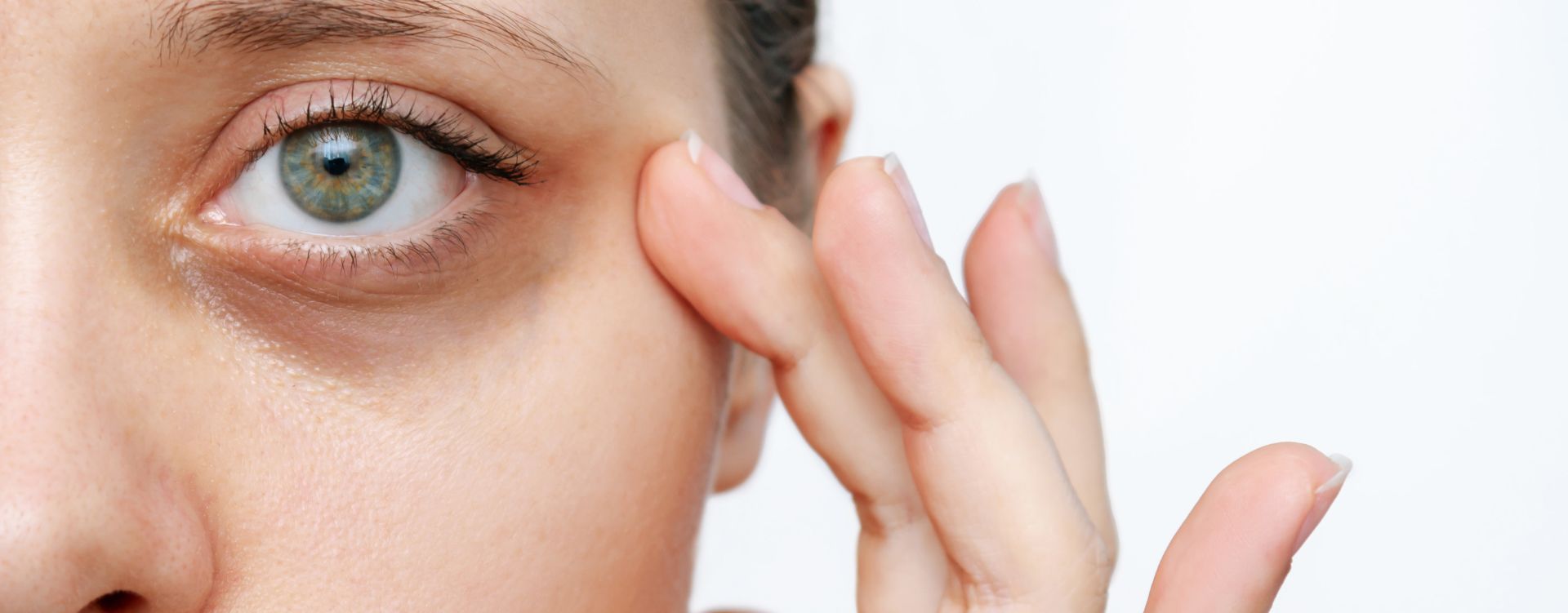
- Position. A fat-pad bag sits directly beneath the lower lashes, above the orbital rim. A malar mound sits below the rim, over the cheekbone. Run a finger along the bony edge of your eye socket. Whatever sits below that line is not a classic eye bag.
- Change through the day. Fat pads look much the same at 8am and 6pm. Malar mounds and malar edema are usually worst on waking and settle as the day goes on.
- Response to salt, alcohol and sleep. Fluid-driven fullness fluctuates with all three. Fat does not.
- Behaviour when you smile. Festoons often become more obvious when the cheek lifts, because the lax tissue bunches.
- Edges. A malar mound has a fairly defined lower border. A fat-pad bag fades into the cheek.
None of this replaces an assessment by someone who understands the face anatomy of the periorbital region, but it is usually enough to tell you whether the thing you are looking at is a volume problem at all.
Why filler makes festoons and malar mounds worse
This is the part that catches people out, because dermal fillers are what the internet suggests for anything under the eye.
Hyaluronic acid is hydrophilic. It binds water, which is exactly what makes it useful for restoring volume elsewhere on the face. In an area where lymphatic drainage is already compromised, and malar mounds occur precisely because drainage there is poor, adding a product that attracts and holds fluid adds to the problem it was meant to solve.
The result is usually a period of looking acceptable followed by gradual worsening: more persistent malar puffiness, a heavier upper cheek, and swelling that no longer settles overnight the way it used to. Because hyaluronic acid can persist for years, that can continue long after the treatment is forgotten.
Filler placed above the mound can also emphasise it, by building up the tissue immediately above a border that was already visible.
If this has already happened, it is correctable. Hyaluronic acid filler can be dissolved with hyaluronidase however long it has been in place, and in malar mounds specifically, dissolving is often the single most effective intervention available.
What causes them
Several things contribute, and most patients have more than one.
Anatomy and genetics. The position of the retaining ligaments and the thickness of the tissue over the cheekbone vary between people, and both are inherited. Malar mounds frequently run in families and can appear in the twenties.
Ageing. Collagen and elastin decline and the orbicularis muscle loses tone, which produces the saggy skin around the eye that allows festoons to form.
Fluid handling and lifestyle factors. Sleep position, salt, alcohol, hormonal changes, allergies and sinus problems all affect how much fluid sits in the area overnight.
Sun damage. Long-term ultraviolet exposure degrades the skin's elastic support and worsens both the laxity and the pigmentation that often accompanies it.
Previous filler. As above, and more commonly than most patients are told.
What actually helps
Honesty matters here more than usual, because festoons and malar mounds are genuinely difficult to treat and no option is reliably excellent.
Dissolving existing filler. If there is product in the area, removing it comes first. Nothing else can be judged until it is gone.
Addressing the fluid. Sleeping with the head elevated, reducing salt and alcohol, and treating allergies or sinus issues will not cure a malar mound, but they reduce the fluid component, which is often a meaningful part of the appearance.
Skin quality treatments. Laser resurfacing and similar energy-based options tighten and thicken lax skin. As a non-surgical treatment they improve festoons more than malar mounds, because festoons are largely a skin and muscle problem, and they will not remove a fluid-filled pad.
Surgery. Direct excision, lower blepharoplasty with attention to the malar area, and in some cases a midface lift are the most definitive options for significant festoons. None is a small procedure and none is performed at PHI Clinic, but where surgery is the right answer we will say so rather than offer something that is not.
Doing nothing. A legitimate outcome. Where the appearance is mild and the alternatives carry real downsides, leaving it alone is often the better decision.
None of these is filler. Tear trough filler in London treats hollowing, which is a different problem.
When filler is the right answer
To be clear, none of this means under-eye filler is a bad treatment. It means it treats a different problem.
Where the concern is genuine tear trough hollowing, a shadow caused by lost volume between the eye and the cheek, carefully placed tear trough filler treatment in London can restore that transition well and safely. Those patients do very well.
The difficulty is that hollowing and malar mounds can coexist in the same face, and treating the hollow without accounting for the mound is what produces the disappointing results. Assessment is what separates the two, and it is the reason a consultation matters more here than the technique that follows it.
Assessment at PHI Clinic
Under-eye complaints are among the most commonly misdiagnosed in aesthetics, usually because the treatment is chosen before the problem is identified.
At PHI Clinic the under-eye area is assessed before anything is offered. Tear trough filler at our London clinic is only recommended where the problem is genuinely one of lost volume, and we are willing to say that filler is not the answer, or that nothing is, rather than treat and hope.
If you have under-eye fullness that has not responded to the usual advice, or you have had filler and the area looks heavier than it did, book a consultation and our practitioners will tell you what you are actually dealing with and what can realistically be done about it.