What Causes Hollow Cheeks
There is rarely a single cause. The ageing process accounts for most of it, but most people arrive with two or three of these working together.
- Facial fat loss with age. The face holds fat in distinct compartments rather than as one even layer. From the mid-thirties onwards these shrink and shift downwards at different rates, which is why cheek volume is lost high on the face while the lower face grows heavier.
- Bone change. Less discussed, and significant. The facial skeleton resorbs over time, particularly around the eye socket and upper jaw. The scaffolding the cheek sits on gradually recedes, and facial elasticity declines alongside it, so there is less holding the tissue in place.
- Genetics and bone structure. Some faces are simply built with less midface projection. If your cheeks were flat at twenty-five, this is structural rather than age-related, and it needs a different conversation.
- Rapid weight loss. Facial fat goes the same way as fat everywhere else, and it cannot be targeted or preserved. Fast weight loss, including on weight loss medication, shows in the face quickly and often more visibly than people expect.
- Smoking. Degrades collagen and elastin directly, slows collagen production and restricts blood supply to the skin, so the face loses both volume and the quality of the skin covering it.
- Sun exposure. Breaks down the collagen that keeps skin taut over the structure beneath, reducing skin elasticity, so the same loss of volume reads as more hollow.
Illness, very high training loads and long periods of low body fat can all produce the same effect. So can simply having a naturally lean face, which is worth saying plainly: hollow cheeks are not a medical problem, and plenty of people never want them changed.
Hollow, Gaunt, or Just Lean?
These get used interchangeably and they are not quite the same thing.
A hollow cheek usually describes a shadow under the cheekbone where support has been lost. A gaunt face tends to mean the effect has spread, so the temples are flat, the tear troughs are hollow and the face reads as drawn overall. A naturally lean face has the same low fat volume but the proportions have always been that way, and the face looks like itself.
The distinction matters because it changes what should be treated. A single hollow responds to support in one place. A face that has become gaunt usually needs volume restored across several areas in small amounts, so cheek fillers in London may be one part of a plan rather than the whole of it, and treating only the cheeks will look odd.
Why the Midface Matters More Than the Cheek Itself
This is the part that changes how the problem should be treated.
The mid face is not a single pad of fat. It is layered, with deep compartments sitting against the bone and more superficial ones nearer the surface, held in place by ligaments. The deep layer provides structure. The superficial layer provides softness and the way light falls across the face.
As the deep compartments shrink and the ligaments loosen, the superficial fat slides downwards. That is what produces the mid-cheek furrow, the diagonal groove that appears across the cheek and is often mistaken for a wrinkle when it is really a change in structure.
The same movement explains two things people usually treat as separate problems: the hollow that appears high on the cheek, and the heaviness that appears lower down as jowls and deepening nasolabial folds, sometimes called smile lines. They are the same event seen from two ends.
It is also why filling the hollow directly is often the wrong instinct. Support placed deeper and higher, where the structure was lost, lifts the whole midface and improves what is happening below it. Product placed straight into the shadow can fill it while leaving the face heavier rather than fresher.
How Filler for Hollow Cheeks Helps
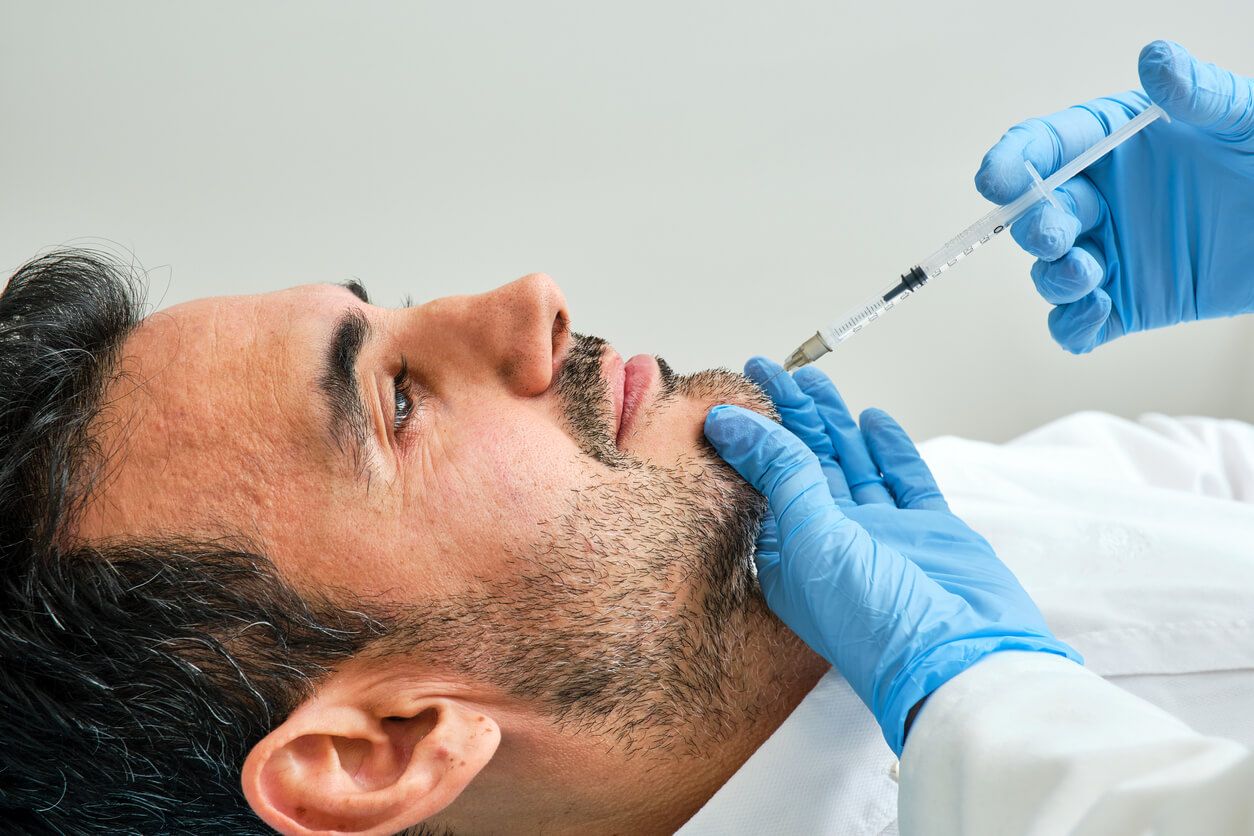
When the cause is genuinely lost volume, cheek filler treatment in London replaces the structural support that has gone. Firm hyaluronic acid fillers are placed deep, usually against the bone, to rebuild projection and restore cheek definition where the fat compartment has emptied. The hollow softens because the structure beneath it has been restored rather than because the shadow has been filled in.
Cheek augmentation of this kind is about restoring facial contours rather than exaggerating them. Done well, the change is difficult to point at: the face catches light properly again, looks rested, and still looks like the same face. Done badly, it is the most recognisable result in aesthetics, with cheeks that sit too high, too round and too far forward, which reads as treatment rather than youth.
The difference is almost entirely placement and restraint. Most people need less dermal filler than they expect, built across more than one appointment rather than delivered in a single session.
When Filler Is Not the Answer
Adding volume to a face that has lost skin quality rather than volume makes it look fuller without looking better, so it is worth being clear about when other non-surgical treatments are more appropriate.
- If the skin has thinned and creped rather than the cheek emptying, treatments that improve skin quality, such as Profhilo or polynucleotides, address the actual problem.
- If laxity is the main issue and the tissue has descended rather than disappeared, skin tightening tackles it more directly than volume does.
- If weight is still changing, it is usually worth waiting. Treating a face mid-way through significant weight loss means treating a face that will look different in three months.
- If the cheeks have always been flat, this is bone structure rather than loss. Filler can still help, but the goal is different and so is the honest expectation of what it will achieve.
Often the right answer combines cheek filler in London with something that improves the skin holding it. We would rather set that out at consultation than have you complete a course of the wrong thing.
What to Expect
Treatment takes around 30 minutes and is carried out by our GMC-registered doctors and NMC-registered nurse prescribers, working to written safety protocols. The fillers we use contain lidocaine, so the area numbs as the product goes in, and most patients find it more comfortable than they expected.
Results are visible immediately, then settle over two to four weeks as the product integrates and any swelling resolves. What you see on day one is not the final result, and the cheeks commonly look fuller at first than they will end up.
Expect possible swelling and bruising for a few days. The recovery period is short, but avoid strenuous exercise, saunas and alcohol for 24 to 48 hours, and leave several days between treatment and flying or any event you care about being photographed at.
Prices
Cheek filler treatment in London at PHI Clinic starts from £400. Midface work often needs more than one syringe, particularly where volume has been lost across several areas, and your practitioner will set out the full cost at consultation before anything is agreed.
A Face That Looks Rested, Not Treated
The aim with hollow cheeks is never to make the face fuller. It is to put back the support that has gone, so the face reads as rested rather than tired, while still looking like yours.
Book a consultatioan with one of our practitioners at PHI Clinic, 102 Harley Street, London. We will look at what has actually changed in your face, including a skin assessment to establish whether volume or skin quality is the real issue, tell you whether cheek filler is the right answer, and be straightforward if something else would serve you better.