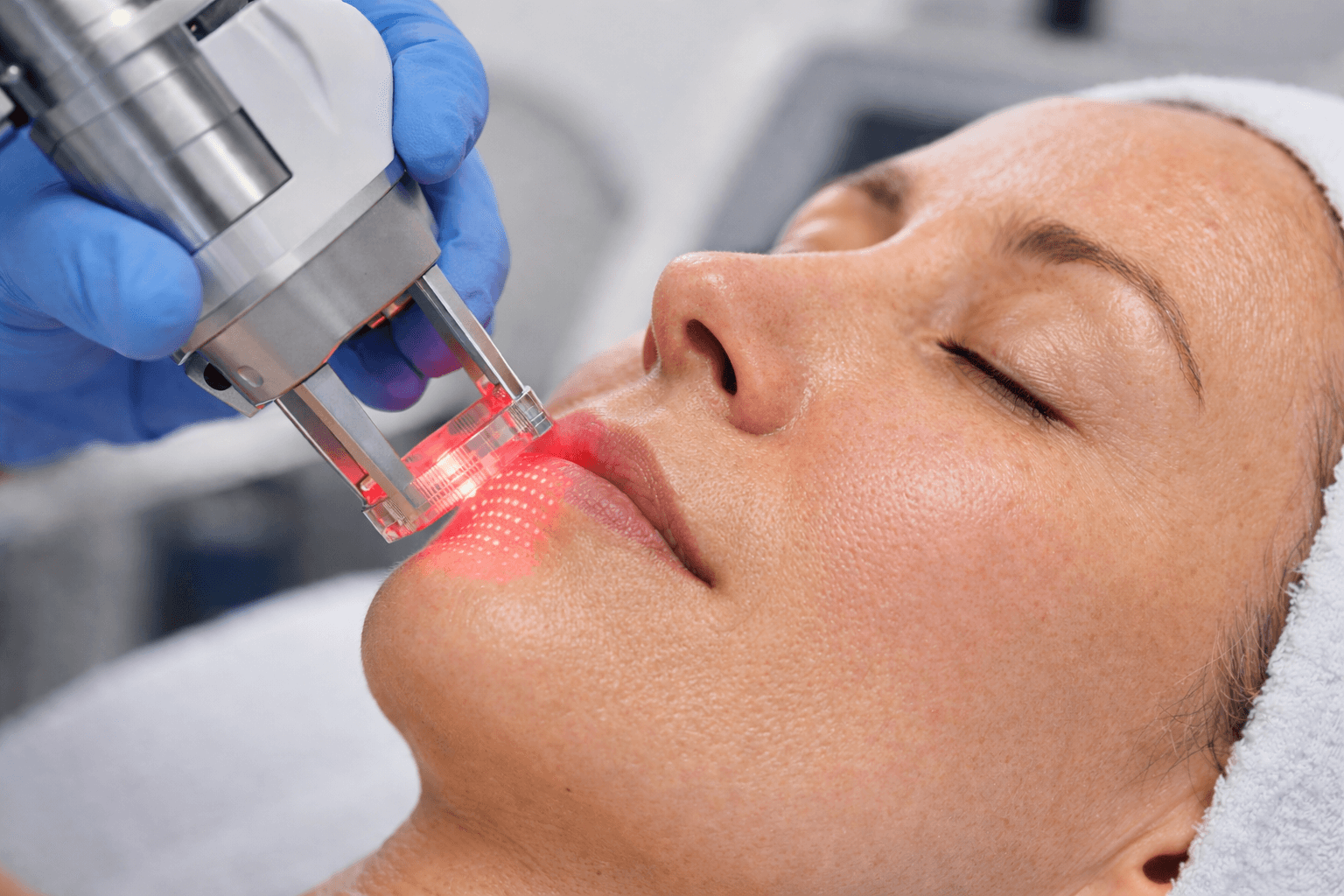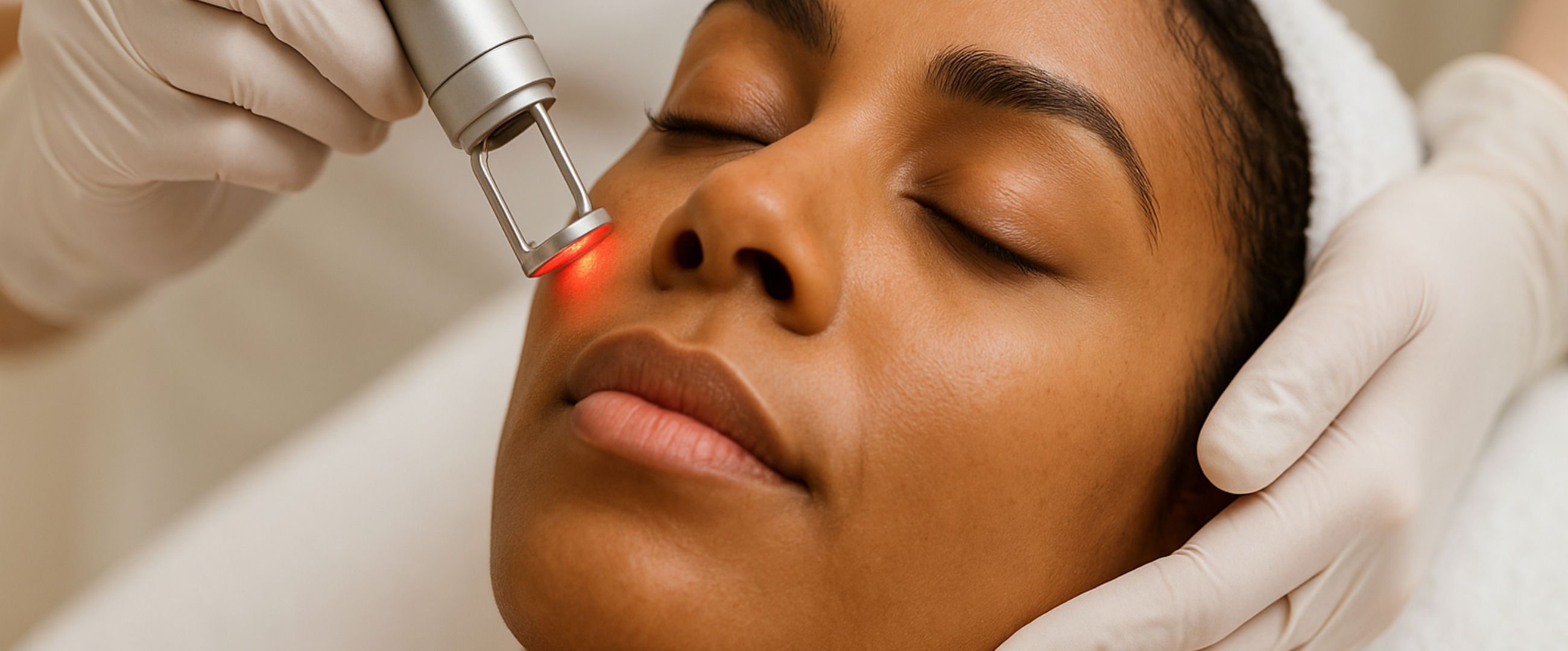
For more videos, follow PHI Clinic on Instagram @phiclinic
Understanding the Face in Layers
Over time, patients may start to notice a range of changes in the face.
There may be some volume loss through the cheeks. The jawline may feel less defined.
The skin may appear less firm than it once did. There may also be pigmentation, uneven tone, or changes in texture. These are often grouped together. But they are not the same problem.
They occur at different depths within the face, and they respond to different types of treatment. This is why a good patient assessment and careful understanding of facial anatomy matter so much at the start.
This is where a layered approach becomes important. This is why a detailed facial assessment is essential before any treatment is recommended.
It ensures that changes are understood properly, rather than grouped together and treated as a single issue.
What the Clinical Evidence Suggests
Clinical literature also reflects this layered understanding of the aging process. Expert consensus highlights that changes occur across multiple anatomical levels, including bone, ligaments, fat, and skin, all of which are interconnected and influence one another.
Because of this, aesthetic treatments that consider these different layers can allow concerns to be addressed more precisely, rather than relying on a single intervention alone. The aim is not to combine treatments unnecessarily, but to use the most appropriate modality at the appropriate depth.
Taken together, this supports a more structured and individualised approach to skin rejuvenation and facial treatment planning, where decisions are guided by how the face changes, rather than by any single product or procedure.
Why One Treatment Does Not Address Everything
Each treatment has a specific role. Dermal fillers can restore volume and support facial contours. They can help define areas such as the cheeks and jawline.
But they do not improve pigmentation. They do not change skin texture.
And they do not tighten the skin.
Energy-based treatments can support collagen production and improve skin firmness.
But they do not replace lost volume.
Laser treatments can improve skin tone and reduce pigmentation.
They may also contribute to skin resurfacing and overall improvement in skin quality.
But they do not restore structure or lift.
Skincare, and particularly medical grade skincare, can support overall skin health and help maintain results. But it cannot replace deeper structural correction where that is needed.
Each treatment is effective. But each is also limited to what it is designed to do. For patients, this often explains why previous treatments may not have delivered the expected result, particularly when only one concern was addressed in isolation.
When a Combined Approach Becomes Useful
In some patients, addressing a single concern is enough. In others, multiple changes are happening at the same time. This is where combination treatments can become useful.
Not to do more for the sake of it. But to treat each concern appropriately.
As we explain in clinic:
“If you only use one tool, you’ll get a one-dimensional result.”
A combined approach can allow different concerns to be addressed more precisely. For example:
- volume to be restored where it has been lost
- collagen to be supported where the skin has softened
- pigmentation to be reduced where tone has become uneven
- texture to be improved where the skin has changed
This is where aesthetic treatment combinations can make sense, particularly when different concerns sit in different layers of the face.
It is not about treatment stacking for its own sake. It is about choosing the right modality, in the right sequence, for the right concern. In practice, this is where a structured treatment plan becomes important.
It allows each concern to be addressed in a way that is proportionate, rather than overcorrecting one area to compensate for another.
A More Balanced Result
When treatment is approached in this way, the result is often more subtle. Not because less has been done. But because it has been done more precisely.
Rather than overcorrecting one area to compensate for another, each part of the face is addressed in proportion. This can produce results that feel more natural and more consistent overall.
It can also help reduce the risk of relying too heavily on one category of treatment, whether that is injectables, lasers, or energy-based devices, to compensate for a concern they were never designed to solve on their own. For many patients, this approach also helps avoid the overfilled or overtreated appearance that can occur when too much emphasis is placed on a single modality.
Where This Fits Within Treatment Planning
At PHI Clinic, this layered approach is central to how treatment is planned.
The starting point is not a specific product or device.
It is understanding:
- what has changed
- where those changes sit within the face
- and which treatments are most appropriate for each concern
From there, treatment plans can be built.
In some cases, that plan may involve a single treatment.
In others, it may involve a combination, introduced over time rather than all at once.
This is where treatment sequencing matters. The order in which treatments are performed can influence both the outcome and the overall patient experience.
The goal is not to do more.
It is to do what is appropriate.
That includes choosing when to use dermal fillers, when to use lasers, when medical grade skincare should support the process, and when to leave an area alone. This process is built around careful assessment and sequencing, ensuring that treatments are introduced at the right time and in the right order to support a more natural outcome.
What Patients Should Know
The most important question is not:
“What treatment should I have?”
It is:
“What am I trying to improve, and what is the most appropriate way to treat it?”
This is exactly what a consultation is designed to answer.
It provides clarity on what is contributing to the changes you are seeing, and how different treatments may work together, or whether they are needed at all.
That shift in thinking changes everything.
It moves the focus away from individual products, isolated injectables, or trend-led choices such as lip filler where it may not be relevant, and toward a more considered plan.
A proper skin assessment and broader facial evaluation help determine not only what may be useful, but also what may be unnecessary.
This matters because even the best treatments can fall short, or cause unnecessary side effects, if used without enough thought about anatomy, priorities, and timing.
At PHI Clinic, this layered approach underpins how all treatments are planned.
The focus is on understanding what has changed, where those changes sit, and how to address them in a way that is balanced and appropriate for each individual.
If you are considering treatment, you can book a consultation to receive a personalised assessment and a structured plan based on your face, your concerns, and the most suitable approach to treating them.
About the Author
Dr Tapan Patel is the founder and medical director of PHI Clinic, a CQC-registered clinic specialising in advanced non-surgical treatments. Known for his evidence-based approach and natural results, he has been featured in Vogue, Tatler, and Harper’s Bazaar.
References
Plastic and Reconstructive Surgery – Global Open
de Sanctis Pecora C et al.