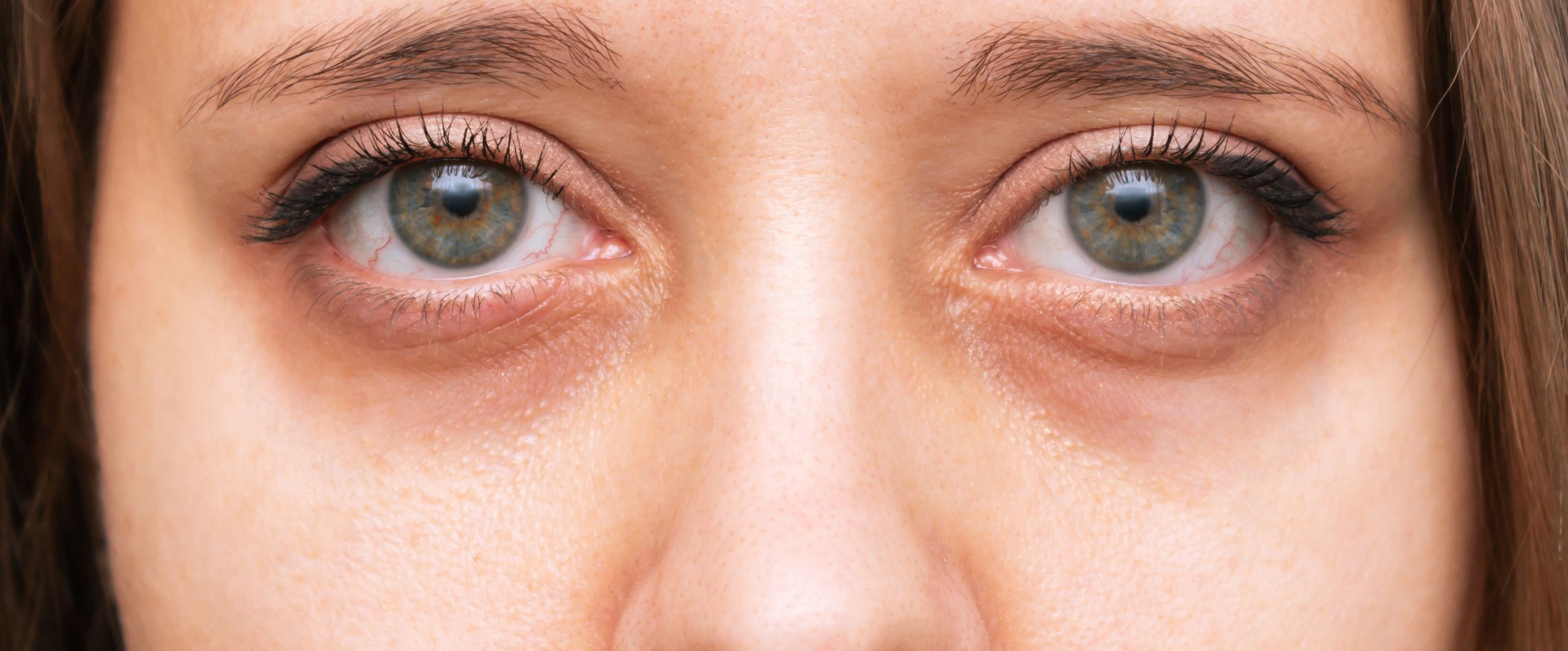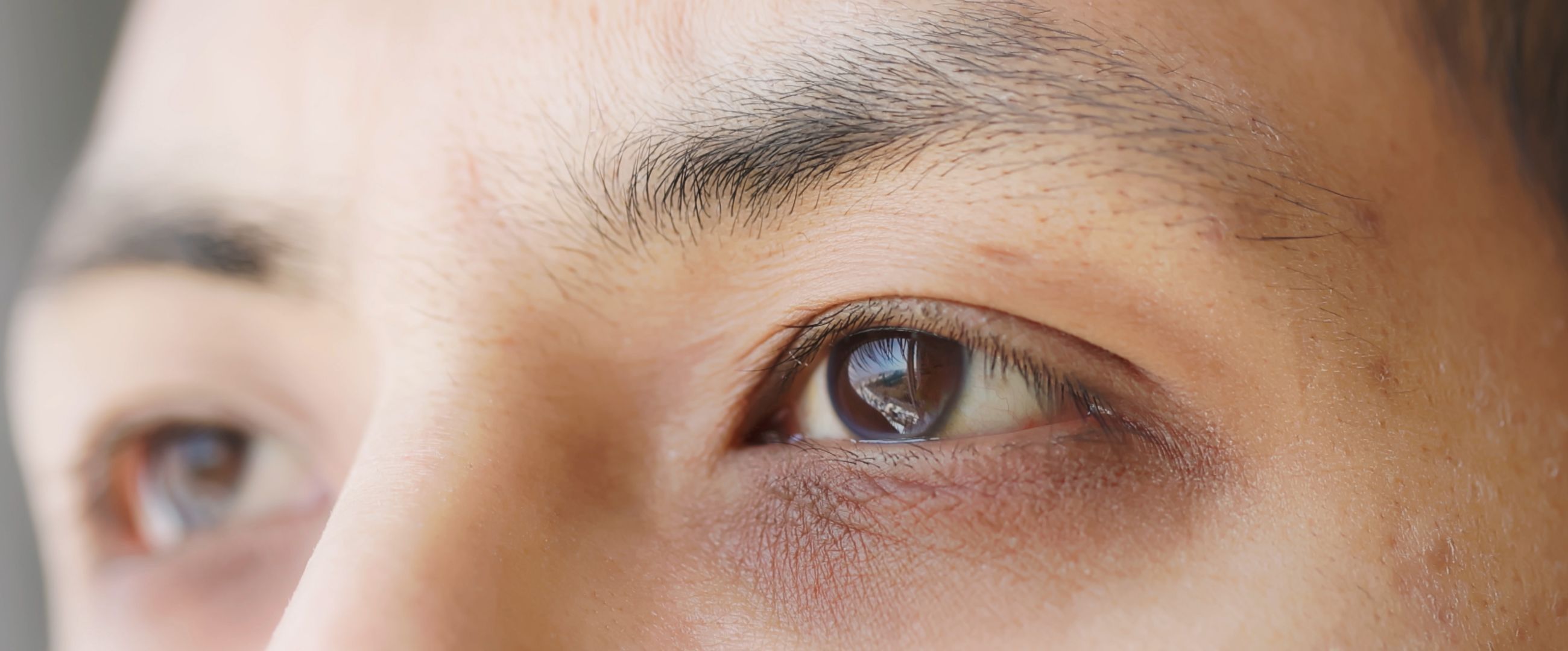
Why dark circles form
Dark circles under the eyes are not a single condition. They are a visible result of several different things happening in the same small area of skin: pigmentation, blood vessels showing through thin skin, shadowing from hollow contours, or some combination of all three. Contributing factors include:
- Genetics and facial anatomy
- Loss of collagen and volume with age
- Fluid retention or circulation changes
- Hormonal shifts
- Sleep, fatigue, or high-salt diets
- Eye rubbing, allergies, or sinus congestion
At PHI Clinic we see four main types. Most patients have a combination, which is why one treatment alone often does not fully resolve the appearance.
Pigmented dark circles
These show as brown or grey discolouration under the eye, caused by excess melanin in the skin itself. They tend to be more visible in Fitzpatrick skin types IV to VI, and are driven by sun exposure, genetics, and chronic inflammation (often from rubbing the area).
Treatment options:
- Chemical peels such as the VI Peel to lighten pigmentation and stimulate collagen
- Topical kojic acid or vitamin C in a structured skincare routine
- Pigment-targeted laser where appropriate to skin type
Vascular dark circles
These look bluish or purplish and are caused by blood vessels visible through thin under-eye skin. They tend to worsen when you are tired or when the area is puffy or congested. Allergies and sinus issues exaggerate them.
Treatment options:
- Vascular laser (V-Beam) to reduce the visibility of dilated vessels
- Addressing the underlying allergy or congestion where relevant
- Cold compresses for short-term puffiness
Structural or hollow dark circles
Sometimes the skin itself is fine, but the contour underneath casts a shadow. This is the tear trough hollow, and it can appear even in younger patients with the right facial anatomy. With age, collagen loss and reduced soft tissue volume make it more pronounced.
Treatment options:
- Tear trough filler with hyaluronic acid, placed carefully in the appropriate plane
- Skin boosters such as Profhilo to support hydration and elasticity in the area
- Combination plans that address the wider mid-face where volume loss extends beyond the tear trough alone
Mixed dark circles
Most patients have more than one type. A common pattern is mild pigmentation plus some hollowing, or vascular shadowing made worse by a slightly hollow contour. Mixed cases need layered treatment: a single approach rarely covers all three drivers. This is why the consultation step matters more for under-eye work than for most other treatments.
What treatment looks like at PHI Clinic
Over-the-counter creams and lifestyle adjustments help at the margins but rarely resolve persistent dark circles. Once the underlying cause has been identified, in-clinic options include:
Chemical peels. The VI Peel is the option we use most often for pigmented under-eye skin. It works on melanin and supports collagen renewal, and is safe across skin types.
Laser. Laser therapy can target pigmentation or visible blood vessels depending on the platform used. The right laser depends on the type of circle and the skin type being treated.
Dermal fillers. Tear trough filler placed in the correct plane with cannula technique addresses hollow shadows. This is technique-sensitive work and is not appropriate for everyone, particularly patients with significant puffiness or very thin skin where filler can cause a bluish tint (the Tyndall effect).
Skin boosters. Hyaluronic acid and polynucleotide-based boosters can improve the quality of the under-eye skin itself. Useful alongside structural treatment rather than as a standalone fix.
When dark circles point to something else
Persistent dark circles can occasionally signal an underlying issue such as iron deficiency anaemia or a thyroid condition. At consultation we ask about your sleep, energy, fluid retention and general medical history. If there is anything that warrants investigation, we will recommend you see your GP before starting cosmetic treatment.
Book a consultation
To find out which type of dark circles you have and which treatment fits, contact the team at PHI Clinic in London or book a consultation at our Harley Street clinic.